Southern Peru –The Manu Biosphere Reserve and Machú Picchú
The Manu Biosphere Reserve has, for its size, the highest diversity of life on earth and is one of the most important conservation units in the world. This tour will visit the wonderful variety of habitats found in the reserve ranging from orchid-laden cloud forest where Spectacled Bears and Andean Cocks-of-the-Rock live unmolested, to untouched Amazon rainforest where monkeys abound and Giant Otters swim in oxbow lakes. A visit to Manu is a window into one of the world's great wilderness areas where wildlife is plentiful and nearly 1000 species of birds have been recorded. Most remarkably, there is virtually no birding in cut-over forest on this trip! We'll also visit the Inca ruins at Machú Picchú - perhaps the most famous archaeological site in South America.
1 October to 20 October 2003
with Dan Lane and Gary Rosenberg as leaders.
 Southern Peru bird list
return to the South American introduction
return to Calendar
Day 1: The tour begins with an overnight flight from London to
Lima, via Madrid.
Day 2: After an early morning arrival in Lima we'll fly on to Cuzco and drive southeast from the town to the Huacarpay lakes. Here we'll see a variety of high Andean waterfowl and wetland-associated birds such as Puna Ibis, Wren-like Rushbird, Andean Negrito, and several raptors. We'll search the arid scrub around the lake for Rufous-fronted Canastero and Streak-fronted Thornbird and should find the pretty Bearded Mountaineer feeding in the tree tobacco alongside Giant Hummingbird. In the late afternoon we'll return to Cuzco for the night.
Day 3: We'll start early, making several stops in the inter-montane valleys, where we'll search for the endemic Chestnut-breasted Mountain-Finch, before arriving at the last Andean pass, Ajcanacu, where we may see Andean Condor. As we descend the eastern slope the forest becomes more continuous and we'll spend the afternoon birding down to our tented camp at 2,800 metres at Pillahuata. Possibilities are many, including Gray-breasted Mountain Toucan, White-collared Jay, and Mountain Cacique, and we'll hope to encounter mixed flocks of ovenbirds, flycatchers, and tanagers. In the evening we'll go to a favourite spot where with luck we may see Swallow-tailed Nightjar. Night in tented camp at Pillahuata.
Day 4: At breakfast we'll be greeted by a varied dawn chorus including the song of the beautiful Red-and-white Antpitta. We'll spend all day birding from our camp at 2,800 metres down to our next stop at 1,600 metres. In the pristine forest along this little-travelled road we'll look for special birds including a wide variety of hummingbirds, flycatchers, and tanagers among others. Night at the comfortable Cock-of-the-Rock Lodge.
Days 5-6: We'll spend two full days birding in the forest around Union and San Pedro, one day in the 2,500 metre zone and one day in the 1,500 metre zone. Among many possibilities are Crested and Golden-headed Quetzals, Blue-banded Toucanet, Chestnut-crested Cotinga, Scaled Fruiteater, Cerulean-capped Manakin, and Deep-blue Flowerpiercer. We'll visit a nearby Andean Cock-of-the-Rock lek to watch up to 20 males engaging in their strange mating dance. At dusk, Rufescent Screech Owl and Lyre-tailed Nightjar are possible. Nights at Cock-of-the-Rock Lodge.
Day 7: After a breakfast, accompanied by the remarkable dawn chorus, we'll leave San Pedro and spend the day birding slowly down to the comfortable Amazonia Lodge at 500 metres. We'll pay particular attention to the stretch between 1,500 and 800 metres, a zone in which forest has disappeared on much of the Andean slopes in South America because of its suitability for cash crops such as tea, coffee and coca. In this part of Peru, however, the forest remains untouched. Birds on this stretch of road include Versicolored Barbet, Cinnamon-faced Tyrannulet, and Long-tailed Tyrant. We'll reach Amazonia Lodge before dusk.
Days 8-9: We'll spend two full days at Amazonia Lodge. This family-run converted tea hacienda has a birdlist of over 500 and new species are continually being added. The lodge is situated in the transitional zone at 500 metres where the last low foothills of the Andes begin to flatten out into the lowland Amazon Basin proper. We'll be birding a variety of habitats including floodplain and hill forest. One day we'll pack a picnic lunch and bird the road from Atalaya to Pilcopata. The possibilities here are enormous and include Buckley's Forest Falcon, Blue-headed Macaw, Koepcke's Hermit, Bamboo Antshrike, Rusty-belted Tapaculo, Red-billed Tyrannulet, White-thighed Swallow, and Two-banded Warbler. Nights at Amazonia Lodge.
Day 10: We'll spend the early morning birding near Amazonia Lodge but as the day begins to warm we'll head in our motorised canoes down the Alto Madre de Dios River to its confluence with the Manu River (about four hours) and then on for another two hours to the comfortable Manu Wildlife Centre. On the river journey we'll be able to see typical riverside species such as Pied Lapwing, Fasciated Tiger-Heron, and Large-billed Tern. Flyovers will include many species of macaws and parrots and this is a fine opportunity for raptor observations. Night at Manu Wildlife Centre.
Days 11-15: We'll spend five full days based at the Manu Wildlife Centre, situated just upriver from the Blanquillo Macaw Lick. One morning we'll visit the lick and observe the spectacle of hundreds of parrots and macaws at close quarters from our floating hides. Here we'll see the beautiful Orange-cheeked Parrot and perhaps the recently described Amazonian Parrotlet. The area around the lodge has the most forest types anywhere in the Manu region and thus the highest biodiversity and the greatest number of bird species. Although investigation of birds here is in its early stages the birdlist is already well over 500. Some of the more interesting and unusual species we'll be searching for in the bamboo are Rufous-headed Woodpecker, Manu Antbird, White-cheeked Tody-Flycatcher, Peruvian Recurvebill, and various foliage-gleaners and antbirds. Some of the scarcer forest species include Bartlett's Tinamou, Razor-billed Curassow, Pale-winged Trumpeter, Sunbittern, Pavonine Quetzal, Cream-coloured Woodpecker, Black-faced Cotinga, Royal Flycatcher, Musician Wren, and Yellow-shouldered Grosbeak to name but a few. We'll also visit oxbow lakes where we'll see Hoatzin, Sungrebe, Agami Heron, and Pale-eyed Blackbird, and with luck we'll spot one of the two Giant Otter families that live in the area. Night birding may produce potoos, Amazonian Pygmy Owl, Spectacled Owl, and Ocellated Poorwill among others. The large mammal lick here, apart from attracting tapirs, peccaries and occasionally a jaguar, also lures guans, curassows and parakeets. Nights at the Manu Wildlife Centre.
Day 16: Today we'll make an early start for the airstrip at Boca Manu (two and a half hours upriver) and our last look at early morning parrot flocks and riverside birds. Our spectacular light aircraft flight over the Andes takes about 45 minutes and we should be in Cuzco by midday. The afternoon will be free for sightseeing, shopping or just relaxing in this beautiful city. Night in Cuzco.
Day 17: We'll leave Cuzco early in the morning for the four and a half hour train journey to Machú Picchú. From the train we'll certainly see Torrent Ducks and White-capped Dippers on the Urubamba River and get closer looks as we leave the train. At the ruins birding will take a back seat as we enjoy a guided tour of this mystical archaeological complex, though White-tipped Swifts will be flying overhead. After lunch we'll look for Inca Wren which is quite common in the bamboo around the ruins and then descend into the Urubamba Gorge for late afternoon birding. Night in Aguas Calientes.
Day 18: We'll spend the morning birding the railway track along the Urubamba River. In the remnant cloud forest we'll be looking specifically for Sclater's and Bolivian Tyrannulets, Silver-backed Tanager, Pale-eyed Thrush, and Capped Conebill. Mixed flocks contain many species of tanager and the endemic Green-and-white Hummingbird is common here. After a late lunch we'll return on the tourist train to Cuzco for the night. Night in Cuzco.
Day 19: We'll catch an early flight to Lima and then visit marshes near the town of Villa where we'll look for such species as Gray-headed Gull, Many-colored Rush-Tyrant, and Wren-like Rushbird. We may also have time to explore the habitats around Lurin where we may find Peruvian Booby, Guanay Cormorant, Peruvian Thick-knee, and Peruvian Red-breasted Meadowlark, all species restricted to the Pacific coast. In the evening we'll catch an overnight flight to London where the tour ends.
Please note that this tour involves some camping and also some accommodation at lodges with shared bathroom facilities.
Cost £4300
Single Room Supplement £160
The single room supplement only covers Lima, Cuzco and Aguas Calientes
Maximum group size: 16 participants and 2 leaders.
The ground arrangements for this tour are organised
by our American associates WINGS.
Southern Peru bird
list
return to top of page
return to the South American introduction
return to Calendar
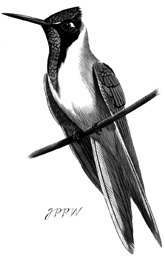
The pretty Bearded Mountaineer should be one of the highlights of our first day birding near Cuzco.
|
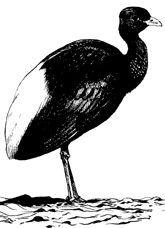
Views of Pale-winged Trumpeters are perhaps the top prize to be won during a visit to Manu Wildlife Centre. |
||