Ecuador - the north, the Amazon and the south
Ecuador is one of the most avian-rich countries in South America: well over 1400 species have been recorded in this comparatively small country. This extensive tour, which is broken into three parts, samples much of that avian richness and we are likely to see in excess of 750 species. The first part takes us to Ecuador's northern Andes, home to a mind-boggling array of hummingbirds, flycatchers and tanagers. Here we visit a comfortable new lodge near Tandayapa, Tinalandia, where we'll explore the Rio Palenque Biological Station and Cotopaxi National Park, and the eastern slope of the Andes at Cabañas San Isidro and the Huacamayo Ridge.
The second part travels to the Amazonian lowlands of eastern Ecuador which are amongst the most diverse areas for birds in the world and where we'll spend seven nights at La Selva lodge situated on a beautiful oxbow lake in the heart of the rainforest. More than 500 species of birds are known from this single locality. Our longer-than-average stay at La Selva will allow us to experience the area's diversity at a more relaxed and comfortable pace.
We end the tour in southern Ecuador, where we'll stay in comfortable hotels throughout and explore dramatic areas such as Podocarpus National Park where splendid forested peaks give way to rich páramo. Near Vilcabamba we'll bird along a trail, where the sensational Jocotoco Antpitta was recently discovered! The trip will conclude with visits to Buenaventura in search of El Oro Parakeet and the Santa Elena Peninsula, home to many Tumbesian endemics.
Each of the three sections can be taken separately or in conjunction with the other sections.
Saturday 28 December 2002 to Saturday 1 February 2003
Sunday 28 December 2003 to Saturday 31 January 2004
with Gary Rosenberg as leader.
Northern Ecuador:
29 December 2002 to 11 January 2003 (London to London)
28 December 2003 to 10 January 2004 (London to London)
 Ecuador bird list
return to the South American introduction
return to Calendar
Day 1: The tour begins in London with a flight to Quito, via Miami. Night in Quito.
Day 2: This morning we'll leave early for a full day on the road to Nono and Tandayapa. Exiting Quito to the northwest, this road first ascends through high agricultural land and then descends through temperate and subtropical forest. The variety of hummingbirds, flycatchers, warblers, and tanagers is remarkable and we'll search for Plate-billed Mountain-Toucan, Andean Cock-of-the-Rock, Golden-headed Quetzal, White-capped Dipper, and the very gaudy Scarlet-bellied Mountain-Tanager, among other special birds. Our destination is the newly built lodge above the community of Tandayapa which will give us excellent access to the Tandayapa-Mindo area. Night at Tandayapa.
Day 3: We'll spend all day along an old section of the Tandayapa-Mindo road which passes through some of the best remaining accessible forest in western Ecuador. Hummingbirds will be plentiful (particularly at some local feeders) and some of the speciality species we are likely to see are Violet-tailed Sylph, Fawn-breasted Brilliant, Gorgeted Sunangel, and Purple-throated Woodstar. Tanagers will also be in abundance and we'll work mixed-species flocks that may contain as many as five or six species of the gaudy Tangara tanagers as well as such gems as Blue-winged and Black-chinned Mountain-Tanagers, and the fancy Grass-green Tanager. The pass along Tandayapa Ridge is one of the richest birding localities in western Ecuador and we'll search diligently here for Tanager Finch, a species poorly known in Ecuador but seen regularly here. Night at Tandayapa.
Day 4: We'll spend the day birding the road to Mindo looking for lower-elevation species that do not get up onto the Tandayapa Ridge. Historically the entrance road to Mindo was one of the best-known and most bird-rich roads in western Ecuador, and today large sections of good habitat and lots of birds still remain. We'll have a good chance of seeing a number of highly restricted species including Scaled Fruiteater, Club-winged Manakin, Choco Toucan, and Yellow-collared Chlorophonia. Tanagers will once again dominate the landscape, including fancy species such as Flame-faced, Golden, Metallic-green, Beryl-spangled, and Black-capped, often all in the same flock! We'll spend the day slowly walking downhill on the road, then return in the late afternoon to the Tandayapa Ridge for the evening chorus of antpittas. Night at Tandayapa.
Day 5: Today we'll travel to Tinalandia, one of the most famous birding spots in Ecuador. Our route will take us into western Ecuador's lowlands and at one location we'll look for 'Choco' specialities such as Double-banded Graytail, Slate-colored Gnatcatcher, Red-and-white Tanager, and the rare Scarlet-breasted Dacnis. We'll continue to Tinalandia, arriving after lunch. Tinalandia has been a favourite of birders for many years; its golf course and stand of wet foothill forest are both superb bird habitats. Masked Water-Tyrants and Pale-legged Horneros strut on the greens, Bronze-winged Parrots and three species of toucans inspect the golf course from convenient perches and Golden-bellied Warblers trill from the edges of the fairways. Inside the forest we'll use the excellent trail system to search for Barred Puffbird, Song Wren, White-tipped Sicklebill, Spotted Nightingale-Thrush, as many as ten species of antbirds, and the decidedly local Blue-tailed Trogon. Night at Tinalandia.
Day 6: We'll spend all day at Tinalandia concentrating on both the golf course and the forest trails. The number of species possible here is truly remarkable - we may see well over 100 species before lunch - and the birding is all around our comfortable cabins. We'll look carefully for all the species mentioned above as well as a number of species that reach their southern limit in western Ecuador, including Chestnut-mandibled Toucan, Olivaceous Piculet, Black-cheeked Woodpecker, Black-headed Antthrush, Esmereldas Antbird, Band-backed Wren, Buff-rumped Warbler, and Dusky-faced Tanager. Streaked Antwrens will be calling right outside our cabins and we can expect White-whiskered Hermits at the hummingbird feeders just outside the dining area. Night at Tinalandia.
Day 7: Today we'll visit the Rio Palenque Scientific Station about 25 miles south of Santo Domingo and Tinalandia. Rio Palenque is an island of moist tropical forest surrounded by plantations of banana, sugarcane, oilpalm, and balsa. It is extremely rich in birdlife and we may encounter many additional species that range south into northwestern Ecuador such as Scaled Pigeon, Band-tailed Barbthroat, Violet-bellied Hummingbird, Purple-crowned Fairy, Collared Trogon, Orange-fronted Barbet, One-colored Becard, Bay Wren, Yellow-tufted Dacnis, Scarlet-thighed Dacnis, and Crimson Finch. Both Rufous and Broad-billed Motmots are commonly heard and we may see the large and local Guayaquil Woodpecker. This research station also supports a number of endemics restricted to southwestern Ecuador and northwestern Peru such as Rufous-headed Chachalaca, Ochraceous Atilla, and Gray-and-gold Warbler. Night at Tinalandia.
Day 8: After a final early morning at Tinalandia we'll begin our journey back to Quito, making a major birding stop at Cotopaxi National Park. At 5,897 metres Volcán Cotopaxi is the second highest volcano in Ecuador and we'll have our lunch along the edge of a high-elevation lake. Birds we might encounter in the alpine scrub and páramo include Carunculated Caracara, Bar-winged and Stout-billed Cinclodes, Andean Tit-Spinetail, Many-striped Canastero, Plumbeous Sierra-Finch, and possibly the endemic Ecuadorian Hillstar. Around the shallow lagoon below the peak we are likely to see Andean Lapwing, Andean Teal, Yellow-billed Pintail, Andean Gull, Grass Wren, and perhaps a variety of 'North American' waders. If the weather is favourable the views of the volcano will be spectacular. Night in Quito.
Day 9: This morning we'll travel east from Quito across the high Andes, descending the Amazonian side and eventually arriving at our lodging, Cabañas San Isidro. Our route will take us over the Papallacta Pass where we'll spend a few hours birding the high-elevation páramo and Polylepis forest. We'll once again have the opportunity for many of the high-elevation species we searched for at Cotopaxi, as well as a number of new species including Rufous-bellied Seedsnipe, Giant Hummingbird, Blue-mantled Thornbill, Red-rumped Bush-Tyrant, and White-chinned Thistletail. In the isolated stands of Polylepis woodland close to the pass we'll look diligently for Giant Conebill, a species restricted to that habitat, and the rare Black-backed Bush-Tanager. During the middle of the day we'll travel on to Cabañas San Isidro, making a couple of stops in remnant patches of subtropical forest that support a number of flycatchers and tanagers. We'll arrive in the late afternoon in time to do some local birding around the lodge. Night at Cabañas San Isidro.
Days 10-11: Cabañas San Isidro, located in the Huacamayo Mountains in the foothills of eastern Ecuador, is home to some 250 species of birds. We will be birding along trails right on the property as well as along the main road that traverses the Huacamayo Ridge. The birding here can be exhilarating, with mixed-species flocks that go on and on. Some of the more special birds we'll search for are Black-billed Mountain-Toucan, Long-tailed Sylph, White-bellied and Slate-colored Antpittas, Barred Antthrush, Rufous-breasted Flycatcher, White-capped Tanager, and White-rimmed Brush-Finch. This region of Ecuador is famous for incredibly rare species such as White-faced Nunbird and Greater Scythebill, both of which have been seen on the trails near our lodge. There is also an Andean Cock-of-the-Rock lek nearby and we may see these fabulous cotingas displaying. Weather permitting, we'll go owling one night in hopes of finding Rufous-banded Owl and the rare and elusive Andean Potoo. Nights at Cabañas San Isidro.
Day 12: After a final morning birding the trails near the cabañas we'll work our way back over Papallacta Pass and to Quito. Night in Quito.
Day 13: The Northern Ecuador section ends this morning and those returning home will catch a flight via Miami to London, where they will arrive on Day 14.
La Selva:
9 January to 20 January 2003 (London to London)
8 January to 19 January 2004 (London to London)
Those joining the 2003 tour at this point will catch a flight from London to Quito, via Miami, on 9 January (Day 11).
Day 13: We'll spend the entire day exploring the road to Nono and Tandayapa. This road descends through lush temperate and subtropical Andean forest where the variety of hummingbirds, flycatchers, warblers, and tanagers is remarkable, and we'll search for such special birds as Andean Cock-of-the-Rock, Golden-headed Quetzal, Toucan Barbet, and the very gaudy Grass-green Tanager. Night in Quito.
Day 14: We'll fly this morning over the Andes to the Amazonian town of Coca and board our boat for the ride down the Napo River to La Selva Lodge. The lodge itself is rustic yet offers a degree of comfort seldom seen among Amazonian lodges: practically gourmet meals and private bungalows, each with a private bathroom. As the lodge itself is located on an oxbow lake, not the main river, we'll transfer to small dugout canoes and paddle 30 minutes across the tranquil lake to reach our accommodations for the next seven nights. After a welcome drink and a late lunch, we'll make the first of many excursions to the newly constructed 100-foot tower, a 10-minute walk from the lodge. The tower, reached via a sturdy staircase that wraps around a gargantuan tree, allows us access to one of the least-known habitats in the tropical rainforest - the canopy. Some of the many possibilities we may see from the tower are Blue-throated Piping-Guan, Great Potoo, Chestnut-fronted and Blue-and-yellow Macaws, Spangled, Plum-throated and Purple-throated Cotingas, White-browed Purpletuft, and Paradise, Green-and-gold, Turquoise and Yellow-bellied Tanagers. Night at La Selva.
Days 15-20: Six full days at La Selva will allow us ample time to explore the many different habitats accessible from the lodge. A highlight of any trip to La Selva is a visit to an easily reached parrot salt lick. Literally hundreds of parrots come early in the mornings to replenish their salt supply by licking and pecking at exposed rocky areas. If we are fortunate we may see as many as four or five species using the lick at the same time, including hundreds of Mealy and Blue-headed Parrots.
La Selva Lodge's excellent trail system will enable us to explore superb primary rainforest on both sides of the Napo River. The list of species found in this vanishing habitat is seemingly endless and we'll concentrate on observing mixed-species flocks of various woodcreepers, antbirds, ovenbirds, flycatchers, and tanagers. Among the more beautiful birds that we'll search for in the forest are Purplish Jacamar, Many-banded and Lettered Araçaris, Golden-collared Toucanet, Collared Puffbird, Scale-breasted Woodpecker, Undulated Antshrike, White-plumed Antbird, Wire-tailed, Striped, Blue-crowned and Golden-headed Manakins, and Fulvous Shrike-Tanager. At night, particularly from the canopy tower, we'll look for Black-banded, Crested and Spectacled Owls, and Tawny-bellied Screech-Owl as well as Great, Gray and Long-tailed Potoos, and Short-tailed Nighthawk.
One of the very pleasant aspects of our stay at La Selva will be the leisurely canoe rides around Garzacocha, the serene lake on which our lodge is located. We'll be watched by prehistoric-looking Hoatzins as we paddle around the edge in search of species found only in flooded forest and along the lake edges, including specialities such as White-chinned Jacamar, Dot-backed and Silvered Antbirds, Cinnamon Attila, Black-capped Donacobius, Buff-breasted Wren, and Masked Crimson Tanager. Our main goal, however, will be to snatch a glimpse of the rare and elusive Zigzag Heron, a species that has proved to be almost common around the lake at La Selva. The boardwalk between the Napo River and Garzacocha traverses excellent semi-flooded forest and we'll look for the entirely yellow Cream-colored Woodpecker as well as Plumbeous and White-shouldered Antbirds and the extremely rare Orange-crowned Manakin. One afternoon we'll canoe down a small stream in search of the recently rediscovered Cocha Antshrike, a species that until the autumn of 1990 was known to science only from a single female specimen.
One morning will be devoted to visiting islands in the Napo River where a completely different assortment of species can be found, some of which are so specialised in their unique habitats that they have never been recorded on the 'mainland'. We'll look particularly for White-bellied Spinetail, Castlenau's Antshrike, Black-and-white Antbird, Lesser Wagtail-Tyrant, River Tyrannulet, Mottle-backed Elaenia, and Orange-headed Tanager. Along the river itself we can expect to see Collared Plover, Pied Lapwing, Large-billed and Yellow-billed Terns, and possibly large groups of Sand-colored Nighthawks that frequent the sandbars. Nights at La Selva.
Day 21: We'll depart from the lodge in the pre-dawn hours for our boat ride back to Coca and a morning flight back to Quito, arriving there by early afternoon. Night in Quito.
Day 22: The La Selva section ends this morning and those returning home will catch a flight via Miami to London, where they will arrive on Day 23.
Southern Ecuador:
18 January to 1 February 2003 (London to London)
17 January to 31 January 2004 (London to London)
Those joining the tour at this point will catch a flight from London to Quito, via Miami, on 18 January (Day 21).
Day 22: We'll begin with a day trip out of Quito to Papallacta Pass and our introduction to high Andean birding. Here we'll search for high-elevation species such as Ecuadorian Hillstar, Blue-mantled Thornbill, Rufous-bellied Seedsnipe, Bar-winged and Stout-billed Cinclodes, Red-rumped Bush-Tyrant, and Plumbeous Sierra-Finch. On the eastern side of the pass are a few intact patches of Polylepis woodland where we'll look for the local Giant Conebill as well as Black-backed Bush-Tanager. We'll descend to the town of Papallacta and look for the incredible Sword-billed Hummingbird, and have lunch at Guango Lodge, where we'll see a nice variety of hummingbirds, including Tourmaline Sunangel and Buff-winged Starfrontlet. On the way back to Quito we'll search the skies for Andean Condors. Night in Quito.
Day 23: This morning we'll take a very early flight to Loja. We'll spend the first part of the day birding the dry valley near Catamayo. Many of the 'Tumbesian' endemics are possible and we'll look for such specialities as Elegant Crescent-chest, Collared Antshrike, Tawny-crowned Pygmy-Tyrant, and Tumbes Sparrow. We'll spend the afternoon at Podacarpus National Park, with protected habitats ranging from Amazonian lowlands to high-elevation páramo. The Cajanuma section has breathtaking vistas of rich temperate forest, and here we'll hope to see many high-elevation Andean species including Black-and-chestnut Eagle, the decidedly local Bearded Guan, as many as 15 species of hummingbirds including the stunning Rainbow Starfrontlet, Gray-breasted Mountain-Toucan, Barred Fruiteater, and Black-crested and Russet-crowned Warblers. Night in Loja.
Day 24: We'll have all day to explore the upper reaches of Podocarpus National Park, perhaps walking a forest trail listening for the mournful song of the Undulated Antpitta, and looking for Chestnut-naped and Rufous Antpittas, as well as Ocellated Tapaculo, White-browed Spinetail, and Yellow-bellied Chat-Tyrant. The afternoon will be spent strolling down the road in search of mixed-species flocks of tanagers perhaps including Scarlet-bellied Mountain-Tanager, Golden-crowned Tanager, and as many as four species of Hemispingus tanagers. Night in Loja.
Day 25: We'll leave Loja early this morning, crossing a high pass on our way to the town of Zamora, gateway to the Rio Bombuscara section of the park. Outside Zamora we'll travel through patches of rich subtropical forest where we'll look for Andean Cock-of-the-Rock. We'll also watch for Torrent Duck and Torrent Tyrannulet along the river, fancy hummingbirds such as the Long-tailed Sylph, and a variety of flycatchers including Cinnamon, Cliff and Lemon-browed. We'll keep alert for less common species such as Yellow-whiskered Bush-Tanager and the gaudy White-capped Tanager. Night in Zamora.
Day 26: We'll spend today along the Rio Bombuscaro. Some of the spectacular species regularly seen along the river are the rare and local White-breasted Parakeet, Coppery-chested Jacamar, Chestnut-tipped Toucanet, Amazonian Umbrellabird, Blue-rumped Manakin, and Orange-eared Tanager. We'll search for several Rio Bombuscaro specialities including Ecuadorian Piedtail, Equatorial Graytail, and the newly described Foothill Elaenia. Night in Zamora.
Day 27: After another morning along the Rio Bombuscaro, searching for more elusive species such as Plain-backed Antpitta and Northern White-crowned Tapaculo, we'll drive back to Loja. At the high pass between the two cities, we'll hike down the old highway in search of high-elevation species such as Mouse-colored Thistletail, Blue-backed Conebill, and Golden-crowned Tanager. Night in Vilcabamba.
Days 28-29: We'll spend two days in the Vilcabamba area concentrating on a new trail at Quebrada Honda. This area is not well known, but its potential is vast, as indicated by the discovery of a new and incredible species in 1997, the Jocotoco Antpitta. We'll explore this enticing place looking for specialities such as Flame-throated Sunangel, Orange-banded Flycatcher, Chestnut-crested Cotinga, Red-hooded Tanager, and Plushcap. We may even spot the new antpitta! The stretch of road between Vilcabamba and Quebrada Honda can be exciting as well, and in the past we've seen Golden-plumed Parakeet and a variety of tanagers including Gray-hooded Bush-Tanager and Black-headed Hemispingus. On one day we'll travel farther south to the town of Valladolid where we hope to find Marañon Thrush, and Silver-backed and Black-faced Tanagers. Nights in Vilcabamba.
Day 30: This morning we'll leave early to begin our two-day journey to Guayaquil. Our destination today is the town of Zaruma, near one of the best birding locations in southwest Ecuador - Buenaventura. En route we'll search for a number of specialities including the local Chapman's Antshrike, Three-banded Warbler, and Black-cowled Saltator. We'll spend the afternoon birding the Buenaventura area. This is the last stronghold for the local El Oro Parakeet. The birding here can be fantastic and we'll look for Fasciated Tiger-Heron, Bronze-winged Parrot, Golden-headed Quetzal, Guayaquil Woodpecker, and Scaled Fruiteater. Night in Zaruma.
Day 31: We'll return to Buenaventura looking for a wide array of foothill species including Gray-backed Hawk, Pale-mandibled Aracari, Red-headed Barbet, Club-winged Manakin, Bay and Whiskered Wrens, Silver-throated Tanager, and Yellow-bellied Siskin. We'll drop down a bit lower for our lunch stop, where on past tours we have encountered Gray-cheeked Parakeet, Speckle-breasted Wren, and Ecuadorian Thrush. We'll spend the afternoon travelling to Guayaquil, stopping along the way to look for Savanna Hawk and Peruvian Red-breasted Meadowlark. Night in Guayaquil.
Day 32: Today we'll make a day trip to the Santa Elena Peninsula where we are likely to see a variety of 'Tumbesian' specialities such as White-tailed Jay, Short-tailed Field-Tyrant, Gray-and-white Tyrannulet, Baird's Flycatcher, and Snowy-throated Kingbird. At the Ecuasal salt ponds we'll see an amazing array of wintering waders as well as local species such as Chilean Flamingo, White-cheeked Pintail, and Gray-hooded and Kelp Gulls. We'll also search for Gray Gull, which occurs here in small numbers. After a delicious lunch of local seafood we'll head back to Guayaquil, stopping to look for Ecuadorian Ground-Dove and Gray-capped Cuckoo en route. Night in Guayaquil.
Day 33: This morning we'll visit the nearby Cerro Blanco Reserve which protects a large area of tropical dry forest where many of the 'Tumbesian' specialities can be found. The birding here can be excellent and we're likely to see such species as Pale-browed Tinamou, Sooty-crowned Flycatcher, Gray-and-gold Warbler, and Black-capped Sparrow. We'll return to Guayaquil for lunch and our afternoon flight back to Quito. Night in Quito.
Day 34: We'll catch a morning flight to Miami, where we'll connect with an overnight flight back to London arriving on Day 35.
Cost for full tour £7350
Single Room Supplement £380
Cost for Northern Ecuador only £3020
Single Room Supplement £140
Cost for La Selva only £2600
Single Room Supplement £60
Cost for Southern Ecuador only £2950
Single Room Supplement £180
Northern Ecuador and La Selva £5020
Single Room Supplement £200
La Selva and Southern Ecuador £4950
Single Room Supplement £240
All these prices are for 2003.
Please note that single cabins are not available at La Selva.
Maximum group size: 16 participants and 2 leaders.
The ground arrangements for this tour are organised
by our American associates WINGS.
Ecuador bird list
return to top of page
return to the South American introduction
return to Calendar
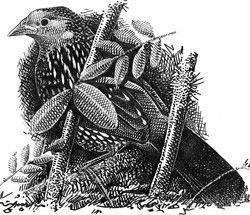
Stunning Ocellated tapaculos skulk in the undergrowth in Podocarpus National Park, though they are more easily heard than seen.