Argentina – from the High Andes to Tierra del Fuego
With a length of over 2000 miles, Argentina stretches from barren High Andean peaks through lush sub-tropical rainforests, the grasslands of the pampas and the arid steppes of Patagonia, to the sub-Antarctic landscapes of Tierra del Fuego. On our tour we'll visit all of these areas, sampling a wide selection of the birds and other wildlife to be found in each.
Our main tour starts in the pampas southeast of Buenos Aires, home to countless waterbirds and raptors. Moving south, we'll explore the Valdez peninsula which typifies many people's image of Patagonia: dry, stony plains covered in xerophytic bushes and dotted with rheas, remote shingle beaches covered in elephant-seals and sea-lions, whales just offshore, and colonies of seabirds. We'll then visit Los Glacieres National Park to see one of the world's few advancing glaciers and explore the forests and steppes in this region, which hold a variety of birds from tinamous to sierra-finches. Finally we'll visit 'the land of fire', Tierra del Fuego, where we'll search for Magellanic Woodpeckers in magnificent southern beech forests and sail down the Beagle Channel among albatrosses, penguins, and fur-seals.
Before the main tour there will be an optional week's extension to the High Andes in northwestern Argentina, where we'll visit Calilegua National Park and the unique Lago de los Pozuelos, home to three species of flamingo and many of the other spectacular birds of the High Andes. After the main tour there will be an optional week's extension to Iguazú National Park on the Brazilian border to view one of the world's most spectacular waterfalls and to explore the rich sub-tropical forests.
Saturday 22 November to Monday 8 December (2003)
Pre-tour High Andes week from Saturday 15 November
Post-tour Iguazú week to Monday 15 December (2003)
with Judy Davis
and David Fisher
as leaders.
 Argentina bird list
return to the South American introduction
return to Calendar
High Andes pre-tour extension:
Day 1: The tour starts in London with an overnight flight to Argentina, via Madrid.
Day 2: We'll arrive in Buenos Aires in the morning, transfer to the domestic airport and fly to Salta in northwestern Argentina, where we'll spend the night. We should arrive in time for some local birding and highlights may include Red-legged Seriema, Buff-browed Foliage-gleaner, Stripe-crowned Spinetail, and Crested Becard.
Day 3: We'll take the old road north to San Salvador de Jujuy which passes through beautiful deciduous yungas forest rich in birds. En route we'll look for Cream-backed Woodpecker, Spot-backed Puffbird, Short-billed Canastero, White Monjita, Greater Wagtail-Tyrant, Yellowish Pipit, and Tawny-headed Swallow, among many others. Just before Jujuy we'll stop at a reservoir that attracts many waterbirds sometimes including Andean Duck and the graceful Andean Gull. We'll then drive on to Libertador General San Martin for the night.
Day 4: We'll spend a full day in nearby Calilegua National Park with a picnic lunch. The park comprises 75,000 hectares of subtropical cloud-forest and is home to countless birds. If the dirt road is in good enough condition we'll drive directly to the pass and then spend the day walking slowly back down through the forest, looking for such species as Golden-collared Macaw, Mitred and Green-cheeked Parakeets, Planalto Hermit, White-throated Antpitta, Ochre-faced Tody-Flycatcher, Highland Elaenia, Plumbeous Tyrant, Pale-legged Warbler, Stripe-headed Brush-Finch, and many other forest birds. The park holds two rare specialities, both restricted to this part of Argentina and adjacent Bolivia, Red-faced Guan and Alder Parrot, and while we should see the parrot we'll be extremely lucky to encounter the guan. Night in San Martin.
Day 5: We'll spend a second morning in the park concentrating on the birds to be found at lower elevations such as Buff-necked Ibis, Blue-crowned Trogon, White-barred Piculet, Ochre-cheeked Spinetail, the spectacular Giant Antshrike, Variable Antshrike, Black-capped Antwren, Two-banded Warbler, and Saffron-billed Sparrow. After lunch we'll drive to Jujuy and check in to our hotel. In the late afternoon we'll visit the Yala Valley to look for another Red Data Book bird, the Rufous-throated Dipper, by far the rarest and most localised of its family. Night in Jujuy.
Day 6: We'll spend the early morning in the Yala Valley looking again for dippers, as well as for Torrent Duck, Dusky-legged Guan, the startling Red-tailed Comet, Sooty-fronted Spinetail, Spot-breasted Thornbird, Streak-throated Bush-Tyrant, Slaty Elaenia, Eastern Slaty Thrush and many others. Later we'll drive north to Abra Pampa on the high altiplano, stopping en route to explore various desert and semi-desert habitats reminiscent of Morocco and Arizona. Here typical birds include Picui and Golden-spotted Ground-Doves, Andean Swift, Giant Hummingbird, Puna and Rufous-banded Miners, Brown-capped Tit-Spinetail, White-tipped Plantcutter, Brown-backed Mockingbird, Black Siskin, and Black-hooded, Mourning, Ash-breasted and Band-tailed Sierra-Finches. Night in a small, basic hotel in Abra Pampa.
Day 7: Starting early, we'll drive west across the altiplano to Lago de los Pozuelos National Monument. Those who have seen Jeffery Boswall's 'Wildlife Safari to the Argentine', may well recall the wonderful footage of the three South American flamingos surrounded by flocks of wintering Wilson's Phalaropes. This was filmed at Pozuelos, and our day at the lake may well be one of the most memorable of the tour. Set in the centre of a high plateau and surrounded by distant barren peaks, Pozuelos could not be more atmospheric. Here we should see Puna Rhea, Chilean, Andean and Puna Flamingos, Andean Goose, Puna Teal, Mountain Caracara, Slate-colored, Giant, and, with luck, Horned Coots, Puna Plover, Andean Lapwing, Andean Avocet, and Gray-breasted Seedsnipe. We should also see some wild Vicuñas, the ancestor of the Llama. Night in Abra Pampa.
Day 8: Today we'll drive back to Salta, making various stops on the way and looking for any species that eluded us on our outward journey. We'll catch an evening flight back to Buenos Aires where we'll spend the night. (The following day will be day 2 of the main tour).
Main tour:
Day 1: The tour starts in London with an overnight flight to Argentina.
Day 2: We'll arrive in Buenos Aires in the morning and travel into the city where we'll spend one night. After lunch we'll visit the nearby wetland reserve of Costanera Sur established on reclaimed land very close to the city centre. This remarkable reserve holds a wealth of waterbirds including such delights as White-tufted Grebe, Whistling Heron, Southern Screamer, Lake Duck, Black-necked and Coscoroba Swans, and sometimes the rather local Black-headed Duck. White-winged, Red-gartered and Red-fronted Coots, and Plumbeous Rails nest among the aquatic vegetation and Monk Parakeets chatter in the surrounding trees. Night in Buenos Aires.
Day 3: We'll spend the day driving to San Clemente, a coastal resort southeast of Buenos Aires. En route we'll pass through the pampas - flat grasslands interspersed with lakes and marshes that seem to go on forever. We'll make many stops along the way to study a selection of pampas birds that should include Maguari Stork, White-faced Ibis, Giant Wood Rail, Yellow-billed Pintail, Rosy-billed Pochard, Snail Kite, Long-winged Harrier, Chimango Caracara, Guira Cuckoo, Fork-tailed Flycatcher, Brown-and-yellow Marshbird, and Yellow-winged Blackbird. Night in San Clemente.
Day 4: After an early morning visit to San Clemente harbour to look for the endangered Olrog's Gull we'll visit nearby Punta Rasa, an area of sand dunes and salt marshes rich in birds. On the sandy beaches and mud-flats there will be flocks of waders, including American Oystercatchers and hundreds of White-rumped Sandpipers, large flocks of wintering terns along with a few local Snowy-crowned Terns, and groups of graceful Black Skimmers. In the reeds and rushes around the salt marsh we may see Bay-capped Wren-Spinetail and Long-tailed Reedfinch, while on the fringes of the marsh we'll search for the very local Hudson's Canastero. On the edge of town we'll look for Firewood-gatherer, named after its habit of building enormous nests of dry sticks. In the afternoon we'll explore the pampas areas just inland, where we'll renew our acquaintance with many of yesterday's birds and will also search for Greater Rhea, Spotted Nothura, Silver Teal, South American Painted-Snipe, and Buff-breasted Sandpiper. Night in San Clemente.
Day 5: We'll spend the morning along a reed-fringed canal searching for Stripe-backed Bittern, Black-headed Duck, Curve-billed Reed-haunter, Sulphur-bearded Spinetail, Wren-like Rushbird, Warbling Doradito, Many-colored Rush-Tyrant, and the brilliant Scarlet-headed Blackbird. After a picnic lunch we'll drive back to Buenos Aires and catch an evening flight to Trelew in Patagonia where we'll spend the night.
Day 6: This morning we'll visit the vast Magellanic Penguin colony at Punta Tombo. En route to the colony we'll probably see our first Elegant Crested-Tinamous as they cross the road in front of the bus - by far the most obliging of the normally skulking tinamou family. The penguin colony is a reserve, but carefully roped-off walkways allow access into the colony providing superb photographic opportunities. In the bay beneath the colony should be a few Great Grebes in their attractive breeding plumage and it's here that we'll look for the Chubut Steamerduck, a recently-split species of very limited range. Southern Giant-petrels cruise up and down offshore and a few pairs of Southern Skua scavenge amidst the penguin colony. In the afternoon we'll drive north to the famous Valdez peninsula stopping en route, at a newly-established colony of unique Burrowing Parrots, the only species in its genus. Night in Puerto Piramides.
Day 7: Starting early, we'll visit the cliffs near our hotel and scan the bay for Southern Right Whales, a few of which are normally present and sometimes give stunning views. Blackish Oystercatchers should be feeding around the edge of the bay and South American Terns should be just offshore. After breakfast we'll drive right around the peninsula stopping en route to look at Lesser Rheas, Tawny-throated Dotterels, Burrowing Owls, Guanacos, Patagonian Foxes, and bizarre Patagonian Hares (Maras). Our destination is Punta Norte, where the beaches will be littered with Southern Elephant Seals and South American Sea-lions. It was here that the BBC filmed the famous sequences of Orcas (Killer Whales) throwing themselves out onto the beach to catch sea-lions and while we are unlikely to witness this, with luck we might see the Orcas as they cruise up and down off-shore. Night in Puerto Piramides.
Day 8: This morning we'll concentrate on the passerines that live in the dry scrub on the peninsula and will search for White-throated Cachalote, Band-tailed and Scale-throated Earthcreepers, Plain-mantled Tit-Spinetail, Sharp-billed and Patagonian Canasteros, Rusty-backed Monjita, Gray-bellied and Lesser Shrike-Tyrants, Patagonian Mockingbird, Patagonian Yellow-Finch, and Carbonated Sierra-Finch. In the late morning we'll drive to Puerto Madryn where we'll have lunch, and then we'll visit another area of dry scrub on the edge of town looking for any species we missed this morning. Later, after checking in to our hotel in Trelew, we'll visit the town of Gaiman, the centre of Welsh Patagonia, where there will be an option for those who wish to take walk around the town to view the old Welsh homes, the Tea Houses, and the school. Local birding is the other option, with another chance to see Burrowing Parrots and other local species. We'll have dinner in a restaurant in Gaiman and then return to Trelew for the night.
Day 9: This morning we'll fly to Rio Gallegos in southern Patagonia, from where we'll drive west to Los Glacieres National Park for a two-night stay. En route we'll see our first Upland Geese and will look for the striking Chocolate-vented Tyrant. After checking in to our hotel we'll visit the shores of nearby Lake Argentino to look for the delightful Magellanic Plover, a species in its own family, which pirouettes in the mud on bubblegum-pink legs. Other birds of interest are likely to include Silvery Grebe, Chilean Flamingo, Flying Steamerduck, Crested Duck, Red Shoveler, Magellanic Oystercatcher, Two-banded Plover, and Least Seedsnipe. Night in Calafate.
Day 10: We'll spend the whole day visiting Los Glacieres National Park, a major tourist attraction due to the Moreno Glacier, a vast tongue of ice slowly descending from the Andes into Lake Argentino. We'll visit the best viewpoint and watch chunks of ice falling off the glacier into the lake below with a tremendous crash. En route to the glacier we'll pass through beautiful forests, open meadows and farmland, each home to a variety of birds, with highlights likely to include Black-faced Ibis, Ashy-headed Goose, Andean Condor, Cinereous Harrier, Black-chested Buzzard-Eagle, Austral Parakeet, Chilean Flicker, and the exotic Rufous-tailed Plantcutter. We also have our best chance here for the scarce Spectacled Duck. Night in Calafate.
Day 11: After more local birding, we'll catch a flight to Ushuaia on the south side of Tierra del Fuego and adjacent to the spectacular Beagle Channel. Depending on the time of our flight we may walk around the harbour where Flightless Steamerducks and Dolphin Gulls are both tame and common and we'll be able to study our first Kelp Geese and Chilean Skuas. Night in Ushuaia.
Day 12: We'll spend the day in Tierra del Fuego National Park, a beautiful landscape of southern beech forests, lakes and rivers. Here we'll mainly be concentrating on forest birds, hoping to see the magnificent Magellanic Woodpecker, Dark-bellied Cinclodes, White-throated Treerunner, Fire-eyed Diucon, Chilean Swallow, Austral Thrush, Black-chinned Siskin, Patagonian Sierra-Finch, and the delightful Thorn-tailed Rayadito. Returning to town in the afternoon we may visit the rubbish dump, a reliable site for White-throated Caracara, among the hundreds of gulls and skuas. Night in Ushuaia.
Day 13: This morning we'll visit the Martial Glacier, just above the town. This used to be a traditional site for the rare White-bellied Seedsnipe, though we'll be very lucky to encounter one. More likely is the equally local Yellow-bridled Finch and we'll also have a good chance of seeing Magellanic Tapaculo and Ochre-naped Ground-Tyrant.
In the afternoon we'll make a trip by boat down the Beagle Channel to the historic English settlement at Harberton. This will essentially be a pelagic trip, though we'll visit various islands inhabited by sea-lions, fur-seals and seabirds from time to time. Throughout the trip Black-browed Albatrosses will be continually in sight, as will giant-petrels and skuas. Magellanic Diving-petrels nest commonly on the channel and we'll flush many of them from the water as we cruise along, marvelling at their resemblance to the northern hemisphere Little Auks. We'll stop at cormorant rookeries containing two different species, Blue-eyed and Rock, and will also encounter bizarre Snowy Sheathbills, Dolphin Gulls, and South American Terns. Just before we reach Harberton we'll stop at a Magellanic Penguin colony which, although small compared to that at Punto Tombo, attracts other species of penguin from time to time. In recent years a few pairs of Gentoos have nested here and a few years earlier a single King Penguin was in residence. In the evening we'll cruise back up the Beagle Channel, marvelling once again at the magnificent scenery and wealth of seabirds. Night in Ushuaia.
Day 14: After breakfast we'll drive across Tierra del Fuego through spectacular mountain scenery, with snow-capped peaks, forested slopes and glacial lakes. There are sites along the way for any of the species we might still be missing, and we'll stop for lunch in a restaurant overlooking a fresh water lake where storm-blown seabirds including albatrosses sometimes get marooned. In the afternoon we'll continue the drive to Rio Grande, stopping on the edge of town to look for the elegant Rufous-chested Dotterel in the few remaining patches of original 'tundra' in this area. Night in Rio Grande.
Day 15: We'll make a morning trip north of town to look for Ruddy-headed Goose, the scarcest of the five Chloephaga geese in Argentina. We'll visit a cliff-nesting colony of Black-faced Ibis and in the grassy dunes near the beach will search for Short-billed Miner. After lunch in town, we'll fly back to Buenos Aires where we'll spend the night.
Day 16: We'll spend the day revisiting the remarkable Costanera Sur reserve, on the edge of the city, where the bird mix is likely to have changed somewhat since our first visit two weeks earlier. In the evening those flying home today will be transferred to the airport and fly back via Madrid to London, where the tour concludes on day 17.
Iguazú extension:
Day 17: Those going on the extension will catch a morning flight to Iguazú for a six-night stay.
Days 18-22: The great falls at Iguazú are one of the most spectacular waterfalls in the world, being more than a mile wide and nearly 250 feet high. They are surrounded by sub-tropical forest and the whole area is now protected as Iguazú National Park. We'll spend nearly a week here based at one hotel. Each day we'll venture out to different areas in the park and to other nearby reserves exploring quiet trails in search of the many birds that live here. During our visit we should see in excess of 150 species, the vast majority of which won't be seen on the rest of the tour and many of which are restricted to southeastern Brazil and this small part of Argentina. Likely highlights are too numerous to mention but may include Great Dusky Swift, Surucua Trogon, Rufous-capped Motmot, Chestnut-eared Aracari, Red-breasted Toucan, Blond-crested Woodpecker, White-throated Woodcreeper, Rufous Gnateater, Blue Manakin, Southern Antpipit, and Neotropical River Warbler. Nights at Iguazú.
Day 23: After a final morning at Iguazú, we'll catch an afternoon flight back to Buenos Aires, where we'll connect with an overnight flight via Madrid to London, where the tour concludes on day 24.
Cost £3310
Single Room Supplement £320
With High Andes extension £4430
Single Room Supplement £430
With Iguazú extension £4630
Single Room Supplement £600
All four weeks £5750
Single Room Supplement £710
All prices refer to 2003
Maximum group size: 16 participants and 2 leaders.
Argentina bird list
return to top of page
return to the South American introduction
return to Calendar
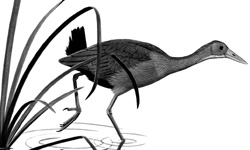
Despite their size, Giant Wood-Rails can be hard to see,
but we'll seek them out while in
the pampas.