Romania – birds and mediaeval monasteries
The remote province of Bucovina in the north of Moldavia is a land in a time-warp. Far from the rush of the late twenty-first century, White Storks follow black clad nuns as they scythe hay, while Black Redstarts sing from nearby monastery roof-tops. These monasteries are remarkable enough to distract the most ardent of birdwatchers from matters avian. Founded during our own Tudor period, the condition of their frescoes can only be described as 'miraculous'. We'll combine relaxed visits to these rural monasteries with birdwatching nearby among remarkably rich forest, hay meadows and hill-village habitats. We'll also explore the high mountains of the Rarau Massif, making our way above the tree line around 5,000 feet in search of Ring Ouzel and Alpine Accentor.
The second part of the tour involves three nights afloat on a modern houseboat in the Danube Delta, the largest wetland reserve in Europe. This area is still not nearly as well-known as it deserves to be from the point of view of wildlife and especially birds. This unique tour combines some of Europe's more elusive birds - Pygmy Cormorant, Pallid Harrier, Paddyfield Warbler, and a great deal more - with the mediaeval landscape of one of the most attractive areas of Eastern Europe, the Carpathians and their foothills.
This tour is tailor-made for couples with varying interests; the villages, mountains and hayfields of Bucovina are notably rich in flowers, as well as rural tradition in dress, farming practice and building. We have chosen our accommodation so that those who would prefer to study the human history of the area rather than its wildlife can do so - right outside the door of where we stay.
Friday 29 August to Saturday 6 September
Leaders to be advised.
 Romania bird list
return to Europe introduction
return to Calendar
Day 1: The tour starts in London with a flight to Bucharest. We'll start birdwatching not far from the airport, at a small wetland site, where we'll find Little Bittern, Quail, Lesser Grey Shrike, and Roller. In the evening we'll have dinner in the open air and then board a comfortable overnight sleeper train for northern Moldavia. We'll have separate two-berth compartments with starched sheets, ample room for baggage and hot and cold water.
Day 2: Arriving in time for breakfast in Suceava, we'll then drive to the Sucevita Valley. We'll base ourselves in a very comfortable family-run chalet by steep, flower-filled hay-meadows on the edge of primary forest. Grey-headed Woodpecker, Red-backed Shrike, Fieldfare, and Serin breed adjacent to our accommodation. Later in the day we'll visit the fortified monastery in the village. As Sacheverell Sitwell, visiting in the twenties, wrote: 'This first view of the painted church of Sucevita is among the most impressive revelations of the whole Byzantine world'. Overnight in Sucevita.
Day 3: In the morning we'll drive up to a wooded pass at 4,000ft in search of Hazel Grouse and Collared Flycatcher. A raptor viewpoint on the edge of the forest will give us a good chance of seeing Honey Buzzard, Booted Eagle, and Goshawk. We'll continue to Moldovita Monastery, remarkable for its eye-witness battle scene based on the Turkish siege of Succava Fortress. After a picnic lunch we'll explore a second tributary valley leading from Sucevita. Overnight in Sucevita.
Day 4: Leaving our rural accommodation we'll drive south to the Rarau Massif and up to the nature reserve of the same name. This is the haunt of Nutcracker and Crested Tit, and a superb viewpoint over the surrounding Carpathians. In the afternoon we'll descend to Voronet Monastery - the 'Sistine Chapel of the East' - and explore the scrub and gravel along the banks of the River Moldova before driving south to Bacau. Night in Bacau.
Day 5: After breakfast we'll continue our journey southeast towards the Danube Delta. This is a scenic journey through the rolling mediaeval strip fields of Moldavia. We may well have the chance for some birdwatching near the lower Danube before we reach Tulcea. Here we'll board our private houseboat in time for dinner, with an evening cruise towards the heart of the Delta. With luck we'll see the first of the usual Delta species as flocks of Glossy Ibis and Night Herons make their way overhead on their evening flights. Overnight on the houseboat, moored in the heart of the Danube Delta.
Day 6: We'll have a full day exploring the heart of the Delta by small boat. The exact locations visited will depend on the water levels at the time, but are likely to include Lakes Furtuna and Martin, large areas of freshwater surrounded by reed beds. Little Egrets and Whiskered Terns will be almost constant companions. Squacco, Night and Purple Herons are abundant and we'll see the occasional Little Bittern. Marsh Harriers will be frequently sighted, while White-tailed Eagle, though less frequent, is likely nonetheless. Red-necked and Black-necked Grebes should be seen, together with good numbers of waterfowl and Pygmy Cormorants. There are stands of willow and poplar above the reeds and along the banks, where we may expect to see Hobby, Roller, Hoopoe, Golden Oriole and more. Overnight on the houseboat, moored in the heart of the Danube Delta.
Day 7: Our second full day in the Danube Delta will take us along channels to the north of the main Sulina Channel. As on the previous day there will be a number of opportunities to go ashore on foot to explore. Our route is along hidden channels beneath overhanging willows and takes us near Lake Nebunu reserve. In the evening we'll moor near Tulcea. Overnight on the houseboat in Tulcea.
Day 8: We'll drive south from Tulcea to Enisala where a large deciduous forest reaches the shore above a fine reed-bed, fish-farm and sewage works. Here we'll visit a colony of Bee-eaters below a ruined castle. Lesser Spotted Eagle, Mediterranean Gull, Black-winged Stilt, and Short-toed, Crested and Calandra Larks should be seen here. We'll have excellent views of a substantial colony of Avocets, as well as large numbers of other waders and duck, including Red-crested Pochard and Garganey. We'll continue south along the coast to Histria and its reserve on Grindul Saele adjoining Lake Sinoie. Both species of pelican, Spoonbill, Collared Pratincole, Spotted Crake, Red-footed Falcon, and Paddyfield Warbler, are all possible here - Histria is without doubt one of the best bird sites in Europe. Later we'll continue to Mamaia for the night.
Day 9: From Mamaia we'll head inland initially to Cheia Dobrogea. This is a fine area of rocky steppe adjoining oak forest. Pied Wheatears breed here and it is a good site for Long-legged Buzzard. In the early afternoon, we'll return to Bucharest and catch a flight to London.
Cost £1250
Single Room Supplement £90
Maximum group size: 14 participants and 2 leaders.
Romania bird list
return to top of page
return to Europe introduction
return to Calendar
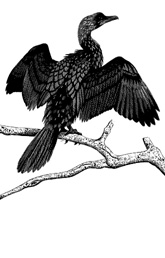
We'll explore the Danube
Delta by boat seeking out specialities such as Pygmy Cormorant.