Costa Rica
Costa Rica is one of the smallest countries in Central America, and is considered one of the safest birding locations in the Neotropics. It is also a beautifully scenic country with lush forested mountains dotted with numerous waterfalls. It has an extensive National Park system, and views ecotourism as one of its most-valued assets. With an avifauna of nearly 800 species (including a high number of regional endemics), and an excellent system of comfortable hotels and lodges, Costa Rica is an ideal choice for a birdwatcher visiting Central America. Our tour will visit all the major regions within the country, from the oak-dominated central highlands to the rich Pacific lowlands, from the lush cloud-forest at Monteverde to the wet tropical rainforest in the Caribbean lowlands. Along the way we should record more than 500 species of birds, including the magnificent Resplendent Quetzal, 40 species of hummingbird, and an amazing variety of colourful tanagers.
Friday 14 March to Monday 31 March
with Gary Rosenberg as leader.
Thursday 30 October Sunday 16 November
with Rich Hoyer as leader.
 Costa Rica bird list
return
to the Central American and Caribbean introduction
return to Calendar
Day 1: The tour starts in London with a flight to San José, via Miami. Night in San José.
Day 2: A short distance from San José is the reserve of Tapantí, and we'll spend much of the day exploring its lush cloud forest. Here we'll have our first encounters with many montane forest species such as White-bellied Mountaingem, Black-bellied Hummingbird, Golden-bellied Flycatcher, Torrent Tyrannulet, Slate-throated Redstart, and Spangle-cheeked, Silver-throated and Bay-headed Tanagers. In recent years several rare Central American species have been found at Tapantí, including Green-fronted Lancebill, Silvery-fronted Tapaculo, and Wrenthrush. In the afternoon, we'll continue into the central highlands to our beautiful mountain lodge. Night on Cerro de la Muerte
Day 3: Our hotel is situated in a beautiful valley in the Cordillera de Talamanca, and we'll have easy access to most of the montane species endemic to the 'Chiriqui' Highlands of southern Central America. Along dirt roads that traverse middle-elevation montane forest we'll encounter many species including Fiery-throated Hummingbird, Streak-breasted Treehunter, Black-capped Flycatcher, Long-tailed and Black-and-yellow Silky-Flycatchers, Sooty and Mountain Robins, Black-billed Nightingale-Thrush, Yellow-winged Vireo, Sooty-capped Bush-Tanager, and Yellow-thighed and Large-footed Finches. Within walking distance of our hotel we may see the magnificent Resplendent Quetzal while at hummingbird feeders we can expect White-throated Mountaingem, Green Violetear, and Magnificent and Volcano Hummingbirds. In the afternoon we'll travel farther up the cordillera where, above the treeline, we'll look for high elevation specialists such as Timberline Wren, Black-cheeked Warbler, Peg-billed Finch, and Volcano Junco. Night on Cerro de la Muerte.
Day 4: After a final look for any specialities that we may have missed, we'll drop down out of the highlands into the Valle de General and travel to Esquinas Lodge, situated at the base of the Osa Peninsula in the southwest portion of the country. We'll stop in middle-elevation forest where during past tours we have seen Sulphur-winged Parakeet, Ruddy-capped Nightingale-Thrush, Barred Becard and Rufous-browed Peppershrike. In the lower-elevation open country around San Isidro we can expect a number of new species including Scaled Pigeon, Snowy-bellied Hummingbird, Fork-tailed Flycatcher, and Streaked Saltator, as well as several other flycatchers, honeycreepers and tanagers. Along the entrance road to Esquinas Lodge, itself situated in a section of lush rainforest, we'll search for a number of local species, including Brown-throated Parakeet, Red-breasted Blackbird, and Ruddy-breasted Seedeater. Night at Las Cruces.
Days 5-6: We'll have two full days for a leisurely exploration of the many habitats around Las Cruces. The station has a wonderful trail system through the botanical gardens and into excellent forest. We'll look for many of the species that are endemic to this region and western Panama, including White-tailed Emerald, Brown-billed Scythebill, Turquoise Cotinga, Riverside and Scaly-breasted Wrens, White-throated Robin, Scarlet-thighed Dacnis, Spot-crowned Euphonia, and Black-headed Brush-Finch. In addition to the many specialities found here, the gardens are very rich in other birds, with numerous North American migrants and a remarkable assortment of flycatchers, warblers, tanagers, and others. Wetlands at nearby San Vito have produced Masked Duck and Pale-breasted Spinetail in the past, as well as the very local Chiriqui Yellowthroat. Nights at Las Cruces.
Day 7: We'll leave Las Cruces early this morning and make our way toward Carara, stopping en route near Esquinas Lodge where we'll search for a number of species we are unlikely to have seen so far, especially Black-cheeked Ant-Tanager, endemic to this part of Costa Rica. After lunch we'll continue to Carara. We may have time for afternoon birdwatching, but in any event we'll certainly be at the Tarcoles River this evening to watch Scarlet Macaws flying to their roosts. Night near Carara.
Day 8: Carara National Park is a relatively undisturbed tract of primary rainforest that is the transition between dry and wet tropical forests, as is exemplified by the very large number of species: five trogons, seven woodcreepers, five manakins, and five large Thryothorus wrens, most of which are fairly easy to see. Along the forest trails we'll look for the species mentioned above as well as Golden-naped Woodpecker, Black-striped Woodcreeper, Great Antshrike, Dusky Antbird, Orange-collared Manakin, Northern Bentbill, and Long-billed Gnatwren. In the afternoon we'll go to the mouth of the Tarcoles River where, depending on the tide, we are likely to see good numbers of waders and waterbirds. In the mangroves nearby we'll look for Mangrove Black-Hawk, Mangrove Hummingbird, American Pygmy Kingfisher, Panama Flycatcher, and Mangrove Warbler. Night near Carara.
Day 9: After a final morning at Carara we'll drive to Monteverde Cloud Forest Preserve. Along the way we'll pass through open pasture and patches of tropical dry forest where we should see many new species including Plain-capped Starthroat, Cinnamon Hummingbird, Banded Wren, White-lored Gnatcatcher, and possibly the elusive Lesser Ground-Cuckoo. In the late afternoon we'll visit the 'Hummingbird Gallery' at the entrance to the reserve where we are likely to see as many as eight species of hummingbirds including many Violet Sabrewings and the Costa Rican endemic, Coppery-headed Emerald. Night in Monteverde.
Day 10: We'll spend most of today in the reserve, a 7,400-acre tract of middle-elevation forest traversed by the continental divide and one of the best-known birding localities in Central America. In spring the preserve is famous for its nesting quetzals and vocal Three-wattled Bellbirds (whose resonant call can be heard a mile away). We'll search for these, and for many other species including Orange-bellied Trogon, Lineated Foliage-gleaner, Streak-breasted Treehunter, Slaty-backed Nightingale-Thrush, Azure-hooded Jay, Three-striped Warbler, and Chestnut-capped Brush-Finch. If we are lucky we may encounter difficult-to-see specialities such as Highland Tinamou, Black-breasted Wood-Quail or Buff-fronted Quail-Dove. In the late afternoon we'll revisit the Hummingbird Gallery. Night in Monteverde.
Day 11: We'll begin our final morning in the Monteverde area visiting a tract of deciduous forest in the Finca Ecologica. The birds found in this type of forest are completely different from those found only a few kilometres away in the wetter reserve, and we'll have a chance of seeing Long-tailed Manakin, Rufous-browed Peppershrike, Golden-browed Chlorophonia, and Scintillant Hummingbird. After lunch we'll descend to the lowlands of Guanacaste Province in the northwest of the country. There is good birding in the grounds of our hotel, and we may see Melodious Blackbird, a recent arrival from the north, as well as Spot-breasted and Streak-backed Orioles. If we're fortunate, we'll find a roosting Boat-billed Heron along the river behind the hacienda. Night near Liberia.
Day 12: We'll leave early this morning for Palo Verde National Park. On the way the road passes through a variety of disturbed habitats and pastures that are often full of birds. We'll look for Double-striped Thick-knees and may encounter dry-country birds such as Gray and Roadside Hawks, Crested Caracara, Yellow-naped and White-fronted Parrots, Orange-fronted Parakeet, Brown-crested Flycatcher, Streak-backed Oriole, and Stripe-headed Sparrow. The road runs through an area of rice production and the flooded fields offer a haven for waterbirds such as Bare-throated Tiger-Heron, Jabiru, Limpkin, Snail Kite, and a variety of waders, particularly in March. Our main destination in the park is a rich patch of tropical dry forest where a spring serves as an oasis for birds and mammals. Here we may see Great Black Hawk, Collared Forest-Falcon, Black-headed and Elegant Trogons, Long-tailed Manakin, Orange-billed Nightingale-Thrush, Golden-crowned and Rufous-capped Warblers, and White-eared Ground Sparrow. Furthermore there often are Howler and White-faced Monkeys lounging around the spring, and we have just a chance for mammals such as Coatimundi, Collared Anteater, and White-tailed Deer. Night near Liberia.
Day 13: This morning we'll depart for the Caribbean lowlands. Our main destination is Selva Verde, our lodge for the next three nights, and along the way we'll pass by Volcán Arenal, one of the most active volcanoes in all of Central America. If it is not enshrouded in clouds we may even see it erupt! In the forest near the volcano we could see lowland species such as Slaty-tailed Trogon, White-fronted Nunbird, and Scaly-throated Leaftosser. In the late afternoon there is often excellent birdwatching along the road near Selva Verde and we are likely to see numerous toucans and parrots sitting in the tops of trees. Before dinner we'll walk down to the edge of the Río Sarapiquí and look for Fasciated Tiger-Heron, Sunbittern, and possibly Short-tailed Nighthawk as it is getting dark. Night at Selva Verde.
Day 14: Today we'll visit Finca La Selva, another biological station operated by the Organization of Tropical Studies. This 1,400-acre reserve is continuous with Braulio Carrillo National Park and is managed as a natural research laboratory. Some 400 species have been recorded at La Selva and although we won't see that many during a one-day visit, we'll certainly experience the avian richness of the region. La Selva is an excellent place to see species such as Great and Slaty-breasted Tinamous, Rufous and Broad-billed Motmots, Keel-billed and Chestnut-mandibled Toucans, Slaty-tailed, Black-throated and Violaceous Trogons, Snowy Cotinga, White-ringed Flycatcher, Stripe-breasted and Black-throated Wrens, Plain-colored Tanager, and on and on through family after family! A visit to La Selva will be an unforgettable part of the trip. Night at Selva Verde Lodge.
Day 15: Today we'll drive the short distance to Braulio Carrillo National Park. We'll have all day to explore two main trails within the park where we hope to find such specialities as Yellow-eared Toucanet, Lattice-tailed Trogon, White-ruffed Manakin, Black-headed Nightingale-Thrush, and Blue-and-gold, Black-and-yellow, Emerald, Olive and Tawny-crested Tanagers. With luck we may see one of the truly rare species found within the park, such as Sharpbill or Lanceolated Monklet. Night at Selva Verde Lodge.
Day 16: Leaving Selva Verde after breakfast we'll work our way back to San José either through Braulio Carrillo National Park or via La Virgen del Socorro, another tract of foothill forest. We'll have a picnic lunch and one last chance at some of the specialities known from this diminishing habitat, before arriving back at our hotel in San José in time for our farewell dinner. Night in San José.
Day 17: We'll catch a morning flight back to Miami, and connect with an overnight flight to London where the tour concludes on Day 18.
Cost £3450
Single Room Supplement £240
Maximum group size: 14 participants and 2 leaders.
The ground arrangements for this tour are organised
by our American associates Wings.
Costa Rica bird list
return to top of page
return
to the Central American and Caribbean introduction
return to Calendar
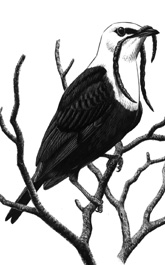
The resonant calls of Three-wattled Bellbirds can be heard throughout the forests at Monteverde.