Austria – birds and music
This twelve-day extravaganza - with its many options in a full, yet relaxed, programme - is ideal both for the ardent birder and music-lover and for anyone with a more casual attitude to leisure activity. The holiday begins, before any musical counter-attractions, with two days devoted to birding to ensure the basis for a good list. Thereafter we'll be caught up in the Eisenstadt International Haydn Festival - 'tranquil, uncrowded, the sensible music-lover's alternative to Salzburg: a gracious place to hear music without the snobbery or the inflated prices'. Our bird excursions will be interspersed with the varied programme of magnificent concerts and associated musical events.
Eisenstadt (population 8000) is less than an hour by road from Vienna yet it still gives the impression of existing in another world, in another age. It grew up in the shadow of the Esterházy Palace and until 1921 was part of Hungary. From 1761 to 1790 this was Haydn's base and his hectic life as court composer was spent commuting between the palace at Eisenstadt and its summer counterpart at Esterháza (now Fertód) on the other side of Lake Neusiedl (and still in Hungary).
Over the years our birdwatching activities have become a well-known feature of the festival and Sunbird groups are now recognised and welcomed as old friends, not only by the musicians and festival organisers, but also, it seems, by the entire population of Eisenstadt from waiters and museum curators to Prince Anton Esterházy himself. Such is the intimacy and friendliness of this place. Haydn himself wrote 'Eisenstadt... where I wish to live and to die'! Without going quite that far, we can understand why successive Sunbird groups enjoy every moment of their stay and yearn to return for more.
Wednesday 10 September to Sunday 21 September
with Bryan Bland and Patty Briggs as leaders.
 Austria bird list
return to the 'Birds and…'
introduction
return to Calendar
Day 1: The tour begins with a flight from London to Vienna where we'll
collect our minibuses and drive to our hotel at Neusiedl am See. Before
dinner we'll explore the Parndorfer Plain for Saker and Red-footed Falcons.
Day 2: A pre-breakfast visit to Jois Marina could produce Spotted Crake, Penduline Tit and Great Reed Warbler, but the main part of the day will be spent exploring the Seewinkel pools for Spoonbill, Garganey, Little Stint, Wood and Curlew Sandpipers, and Kentish Plover, and searching the Hansag Plain for Great Bustard. Other highlights in recent years have included Bittern, White-tailed Eagle, Marsh Sandpiper, and Ferruginous Duck. Night at Neusiedl.
Day 3: A pre-breakfast saunter along the reed path and Neusiedl Marina may reveal a late Bee-eater or Bluethroat, and various crakes and warblers. Later, Marchegg Forest could produce Black Stork, Collared Flycatcher and a host of woodland birds. In the afternoon we'll visit Petronell (Roman Carnuntum, with well-preserved amphitheatres) and then transfer to our hotel in Eisenstadt, in good time for our first concert.
Days 4-11: Eisenstadt is a very special place and the whole ambience provides the perfect setting for a festival. And of course the actual venues - the very palaces, churches, chapels and salons for which Haydn wrote his music - could not be bettered.
Each year the festival offers something different and refreshing. Maybe a festive evening at Oslip mill - tracing the musical influences on Haydn's work from Croatian folk music to the postman's horn and military recruiting trumpet. Or an organ-crawl with the Studio da Camera and Ingemar Rainer, with recitals on some of the seven surviving organs known to Haydn.
Every year we hear no fewer than ten Haydn symphonies, various oratorios and great masses, numerous string quartets, and concertos for organ, for trumpet, and for piano. There is also a rare opportunity to see a Haydn opera. So far these have included La Fedelta Premiata, Orlando Paladino, Philemon und Baucis, Il Mondo della Luna, L'isola disabilita, Armida, L'incontro improvviso, La canterina, Lo speziale and La Vera Costanza.
Nor is the festival all Haydn. A highlight for some was the Vienna Philharmonic Orchestra conducted by Riccardo Muti playing Bartok's Deux Images and Schumann's third symphony - or, as a complete contrast, the fun evening with the Classic Buskers from Cambridge. For others it was our private recital in Vienna with Manfred Huss playing on Haydn's own fortepiano in Haydn's house, or maybe the charming trio who performed especially for us works for violin, oboe and piano by Telemann, Handel, and Benda in the newly-restored Notre Dame church in Bratislava, Slovakia. Other composers represented have included Bach, Beethoven, Bernstein, Debussy, Dvorák, Gluck, Grieg, Handel, Hummel, Kodály, Lennon & McCartney, Mozart, Pleyel, Scarlatti, Shostakovich, and Strauss.
Orchestras besides the resident Austro-Hungarian Haydn Philharmonic (Adam Fischer), have included the English Concert (leader Trevor Pinnock), Amsterdam Baroque (Ton Koopmann), Die Tafelmusik (Bruno Weil), Consortium Classicum (Dieter Klocker), the Orchestra of the Age of Enlightenment (Frans Bruggen), Academy of Ancient Music (Paul Goodwin), Lithuanian Chamber Orchestra (Saulius Sondeckis), Anima Eterna (Jos van Immerseel)... with star soloists Cecilia Bartoli, José Carreras, Sumi Jo, Peter Schreier and Ramón Vargas.
And in addition to all the official festival events, we'll be arranging private visits with the Hapsburg Empire specialist Robert Avery to such venues as Vienna, Bratislava, Sopron (medieval walled city) and the overwhelming Esterházy summer palace at Fertód in Hungary where so much of Haydn's music was first performed, and where in recent years the Budapest Baryton Trio have delighted us with a private concert.
The same mix of the familiar and the unexpected holds true for the birds. Annual favourites range from Great Bustard and Spoonbill to Penduline Tit and Alpine Chough. Others are equally popular but less predictable - Red-footed and Saker Falcons, Spotted and Little Crakes, Bittern, Red-crested Pochard, Bluethroat, and Moustached Warbler. Previous year's surprises included Squacco Heron and Long-legged Buzzard. To see these we visit the Hohe Wand (= High Wall) with its limestone cliffs and coniferous forests, the 2,075-metre Schneeberg ('King of the Northern Alps'), the reedbeds and marinas along Lake Neusiedl, and above all the bird-rich gardens of the Esterházy Palace itself.
But of course it is not just the marvellous selection of birds or the feast of magnificent music that ensures that the holiday is so popular. It is the particular mix. Imagine, for instance a day which began with Black Woodpecker and (via more woodpeckers and finches at Kitsee Castle and a concert in Slovakia) ended with the most stirring performance of The Seasons imaginable. Or a day which opened with Grey-headed Woodpecker and closed with the Hanover Band and Mozart's clarinet concerto on original instruments, followed by dinner at the Haydnbrau. Or Middle Spotted Woodpecker and the Nova Brass Quintet at the Leopold Temple. Or Nutcracker and Tafelmusik. Days to savour for ever. Nights in Eisenstadt.
Day 12: After attending one of Haydn's great masses in a full liturgical setting in the church for which it was written, and the closing symphony concert in Eisenstadt, we'll return to Vienna and catch our flight back to London.
Cost £2090 (includes good tickets for all
concerts)
Single Room Supplement £160
Maximum group size: 16 participants and 2 leaders.
Austria bird list
return to top of page
return to the 'Birds and…'
introduction
return to Calendar
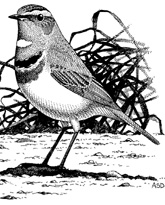
The reeds around Neusiedl should hold colourful Bluethroats.