Papua New Guinea
The words Papua New Guinea evoke many images - the splendour and uniqueness of the many species of birds-of-paradise, the mystery of the highlands where multitudes of clans lived in isolation from one another and from the Western world until the 1930's, the world's last unknown...
Until recently, travel in Papua New Guinea was thought to be for rugged explorers. This has changed as the country's infrastructure has developed over the past decade. Comfortable lodges now exist in both the highlands and the lowlands affording superb birding opportunities as close as the lodge grounds. This, combined with the availability of scheduled flights and charters to remote areas of the country, provides excellent opportunities to travel in search of the bird specialities of Papua New Guinea with its various endemic groups.
The New Guinea region is one of the most significant areas of bird diversity on earth, with some 400 endemic species including such outstanding families as the birds-of-paradise and the paradise-kingfishers. This tour visits some of the less well known areas and provides a chance to see species and places that are not on the standard tour circuit that has developed over the past few years. The island still has vast areas of rain forest intact, and many remote and inaccessible sites. It is an exceptionally beautiful and wild place, and this will undoubtedly add an extra element to our enjoyment of its wonderful birds.
After the main tour we'll be offering an exciting extension to New Britain and Manus in search of the many endemics, and the beautiful and much sought-after Superb Pitta.
Wednesday 3 September to Sunday 21 September
Extension to Sunday 28 September
with Ian Burrows and Judy Davis as leaders.
 Papua New Guinea bird list
return to Australasia introduction
return to Calendar
Day 1: The tour will start in London in the evening with a flight
to Port Moresby, via Singapore, arriving on the morning of Day 3.
Day 3: After checking in to our hotel we'll begin our birdwatching with a visit to the ponds at the Pacific Adventist University to look for Australasian Little Grebe, Pied Heron, Green Pygmy-Goose, Pacific Black Duck, Wandering Whistling-Duck, White-browed Crake, Fawn-breasted Bowerbird, Singing Starling, and Grey-headed Mannikin. Night in Port Moresby.
Day 4: Today we'll travel up into the hill forest at Varirata National Park, where we'll be doing both savannah and rainforest birding. We'll look for Raggiana Bird-of-Paradise at its lek, hear the amazing growling call of the eastern form of Magnificent Riflebird, and see our first manucodes, among the most primitive of the bird-of-paradise family. We'll see the enormous mounds of the shy and retiring Black-billed Brush-turkey, and maybe even the birds themselves. Kingfishers are an outstanding feature here and the rare Brown-headed Paradise-Kingfisher will be a primary target bird, while the noisy trilling Yellow-billed Kingfishers may be hard to spot up in the forest canopy. Other gems will include Forest Kingfisher, the tiny and elusive Mountain Red-headed Myzomela, the very secretive and skulking Chestnut-backed Jewel-babbler, the even more secretive Painted Quail-thrush, and the famous 'poison bird' - the Hooded Pitohui. This will be a varied and interesting day that will introduce us to the fascinating forest birds of New Guinea. Night in Port Moresby.
Day 5: By way of contrast, we'll spend this day in the savannah lands and mangroves of the Aroa and Hisiu areas, looking for local specialities such as Orange-footed Scrubfowl, Collared and Little Kingfishers, the rare Mangrove Fantail, Mangrove Golden Whistler, the very local endemic White-bellied Whistler, White-throated Gerygone, and Silver-eared, Dusky, Brown-backed and Yellow-tinted Honeyeaters. We'll stop to try for Spotted Whistling-Duck and Black Bittern at sites near Vanapa on our way home. Night in Port Moresby.
Days 6-7: This morning we'll fly to Kikori, a coastal town in the Gulf of Papua, where we'll stay for two nights. We'll explore the oil pipeline road and surrounding logging tracks, where we have a very good chance of seeing the spectacular Vulturine Parrot, the incredibly noisy Palm Cockatoo and interesting endemics such as Yellow-capped Pygmy-Parrot, Golden Cuckoo-shrike, White-spotted Mannikin, and King Bird-of-Paradise. Southern Cassowaries sometimes patrol the forest edge and the amazing Southern Crowned Pigeon can also be found here in the first hour of daylight. Nights in Kikori.
Day 8: We'll spend another morning birding along the pipeline road before flying to Port Moresby, arriving late in the afternoon. Night in Port Moresby.
Days 9-10: This morning we'll fly to the small town of Kiunga in the far west of the country on the great Fly River. The lowland forest in this area holds several rare and little-known species. The spectacular Flame Bowerbird is one of our prime targets and other rare residents include Long-billed Cuckoo, Large Fig Parrot, and Obscure Honeyeater. Another attraction is the bird-of-paradise display tree where several fully-plumed male Greater Birds-of-Paradise vie for the attention of passing females. Here also is the western form of Magnificent Riflebird, with its rather appropriate wolf-whistle call. Nights in Kiunga.
Day 11: Today we'll fly to Mt Hagen where we'll spend the rest of the day exploring the montane grassland and forest remnants of this heavily cultivated area. We'll also visit one of the local villages which has set aside some forest as a wildlife reserve. Target species today are Papuan Harrier, Hooded Mannikin, Marbled Honeyeater, Yellow-breasted Bowerbird, and Superb Bird-of-Paradise. Night in Mt Hagen.
Day 12: Today we'll fly to Tari and transfer to Ambua Lodge, one of the major highpoints of the trip with its incredible diversity of highland species and the fascinating Huli tribal culture. We'll be using one of the local guides who is an expert birder and knows where the current best sites are for many species. We'll spend our time here birding from the road and exploring forest tracks, while the lodge grounds have an interesting and quite extensive series of trails. Birding is hard work at times, but the pleasures and rewards are immense and we'll have an unforgettable stay in this beautifully sited, comfortable lodge, overlooking the magnificent Tari Valley. We'll also make trips down to the valley for the lower altitude species, or up to the extensive grasslands at the Tari Gap for the higher altitude forms.
Birds have always played a major role in the lives of the local people and many of the more exotic feathers can be seen in their colourful head-dresses and costumes. For those participants who want a greater cultural experience, optional excursions can be arranged at the lodge in lieu of some birding excursions.
Days 13-16: Birds-of-paradise are the main stars at Ambua, and we should enjoy great views of many species. We can expect two PNG endemics; the incredible and very localised Ribbon-tailed Astrapia, only discovered in 1948 after the plumes were seen in a local head-dress, and the large and beautiful Stephanie's Astrapia which is a wonderful sight in the early morning sun. We'll also encounter the amazing King of Saxony, the noisy Superb, and the very shy and astonishingly colourful Crested Bird-of-Paradise, the last being one of the hardest to see well. We may also see the sombrely plumaged Loria's Bird-of-Paradise with its strange piping call, the truly extraordinary Short-tailed Paradigalla, the huge Brown Sicklebill with one of the strangest calls on earth, bearing an uncanny resemblance to the sound of a machine gun, the subtle Lawes' Parotia with its curious dancing grounds, and the very rare and endangered Blue Bird-of-Paradise, another PNG endemic, that bugles away from a treetop down in the valley.
These are just the paradisaeids, the support cast can include such stars as the very rare and secretive New Guinea Harpy-Eagle, the little known Meyer's Goshawk, Chestnut Forest Rail, the New Guinea form of Log-runner (which is most likely a separate species), Blue-capped Ifrita, Orange-crowned Fairywren, and a great variety of parrots including Blue-collared Parrot, Papuan King-Parrot, Papuan, Plum-faced, Goldie's, Orange-billed, and Yellow-billed Lorikeets, Brehm's, Madarasz's, Modest and Painted Tiger-Parrots, and the world's smallest parrot - Red-breasted Pygmy-Parrot.
Australasian robins are also well represented here, and we have a chance for White-winged, Blue-grey, Ashy, Black-throated and Garnet Robins, and the rare and shy but vocal Lesser Ground-robin. Other highlights may include Sclater's, Regent, Black-headed, and Brown-backed Whistlers, the noisy Belford's and Yellow-browed Melidectes, Grey-streaked, Rufous-backed and Smoky Honeyeaters, the amazing skulking Lesser Melampitta, Long-tailed Shrike, Torrent-lark, and representatives of New Guinea's two endemic families - Crested and Tit Berrypeckers - and Spotted, Mid-mountain and Fan-tailed Berrypeckers. Nights at Ambua Lodge.
Day 17: After some final early morning birding around the lodge we'll bid farewell to amazing Ambua and fly down to Port Moresby. In the afternoon we'll take an optional trip to Varirata National Park in search of anything we missed on our earlier visit. Night in Port Moresby.
Day 18: This morning we'll visit the National Botanical Gardens on the outskirts of Port Moresby where we'll see savannah species we may not have encountered before. Figbird, Chestnut-breasted Mannikin, and Singing Starling are common here and there are several active bowers of the Fawn-breasted Bowerbird in the Garden's surrounds. In the afternoon we'll catch a flight to London, via Singapore, arriving on Day 19.
New Britain and Manus Extension:
Days 18-20: This morning we'll fly to New Britain looking for many seldom-seen endemics. We'll visit lowland and hill forest near Hoskins and Kimbe to look for Melanesian Scrubfowl, Red-knobbed, Yellow-tinted, Black and Finsch's Imperial Pigeons, Red-knobbed Fruit Dove, Red-chinned Lorikeet, Blue-eyed Cockatoo, White-mantled Kingfisher, Violaceous and White-necked Coucals, Black-tailed Monarch, Lesser-Shining Flycatcher, Black-headed White-eye, New Britain Friarbird, Ashy Myzomela, Bismarck Wood-swallow, Long-tailed Myna, and Island (Bismarck) Crow. We'll also visit Kimbe Island to try to find small island specialists including Nicobar Pigeon, Island Imperial Pigeon, Mackinlay's Cuckoo-Dove, and Scarlet-bibbed Myzomela. Nights at Walindi.
Day 21: We'll spend another morning birding around the Hoskins area and then fly to Lae in the afternoon. Birding around the outskirts of the town may reveal Black-browed Triller, Scrub White-eared Meliphaga, and with luck, the large and noisy Varied Honeyeater. Night in Lae.
Days 22-23: This morning we'll fly to Manus where we'll spend two days birding the main island. The prime target endemic species here is the rare and elusive Superb Pitta. With care, camouflage and patience we should get to see it as it responds to the calls of the local village guide. Other endemics we can expect here are Manus Boobook, Meek's Pygmy-Parrot, the ubiquitous and noisy Manus Friarbird or 'Chauka', and Admiralty Pied Monarch. We will also get a second chance for Black-headed White-eye which is commoner here than in New Britain. Nights in Lorengau.
Day 24: After a morning birding near the coast at Momote we'll fly to Port Moresby. Night in Port Moresby.
Day 25: This morning we'll visit the National Botanical Gardens on the outskirts of Port Moresby where we'll see savanna species we may not have encountered before. Figbird, Chestnut-breasted Mannikin and Singing Starling are common here and there are several active bowers of the Fawn-breasted Bowerbird in the Garden's surrounds. In the afternoon we'll catch a flight to London, via Singapore arriving on Day 26.
Cost £5480
Single Room Supplement £580
With extension £7770
Single Room Supplement £940
Maximum group size: 14 participants and 2 leaders.
Papua New Guinea bird list
return to top of page
return to Australasia introduction
return to Calendar
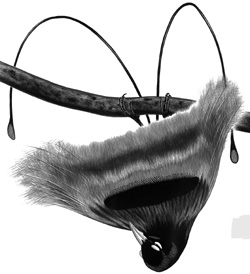
Of the many birds-of-paradise we are likely to see at Ambua, the Blue is perhaps the most stunning.
|
Our prime target on Manus will be the rare and elusive Superb Pitta. |
||