Australia
Australia is a magical continent in every way. Isolated from the nearest other landmass for over 50 million years, the Australian fauna has evolved in wild and wonderful ways and many of its birds and mammals are found nowhere else. For many, the experience of looking at a unique creature is accompanied by delight and wonder, and in Australia this experience probably occurs more frequently than anywhere else. On our tour we'll hope to see Emus, megapodes, lyrebirds, fairywrens, scrubwrens, honeyeaters, bowerbirds, birds-of-paradise, and of course, kangaroos, possums, wombats, cute Koalas, and shy Platypuses.
The Australian countryside is equally varied, ranging from the temperate forests, farmland, pastures, and mallee scrub of the south, through arid deserts, dry eucalyptus woodlands and the tropical rainforests of the north, to the splendours of the Great Barrier Reef. Our extensive tour explores all of these habitats and samples a wide cross-section of Australia's wonderful natural heritage.
One of Australia's unique birds is the atmospherically named Plains-wanderer and we'll be offering a four-day pre-tour extension to look for this special bird at one of its few accessible sites. These will be Sunbird's 18th and 19th tours to Australia.
Saturday 4 October to Sunday 2 November 2003
pre-tour extension from Tuesday 30 September
with David Fisher
and Judy Davis
as leaders,
and Philip Maher, Richard Loyn, John Cox, Niven
McCrie, John Crowhurst, Trevor Quested and Tony Palliser
assisting locally.
 Australia bird list
return to Australasia introduction
return to Calendar
Optional pre-tour extension:
Day P1: The tour starts in London with an evening flight to Australia which arrives early on the morning of day P3.
Day P3: We'll arrive in Melbourne in the morning and transfer to our hotel to rest. In the afternoon there will be an optional excursion to a local park to see our first colourful Australian birds including Galahs, Sulphur-crested Cockatoos, Red-rumped Parrots, and Laughing Kookaburras. Night in Melbourne.
Day P4: We'll leave early and drive north through the Victoria countryside seeing common but spectacular roadside birds such as White-faced Heron, Maned Duck, Brown Falcon, Magpie Lark, and Australian Magpie. In the afternoon we'll arrive in the Deniliquin area where we'll spend two nights. While there are many species to be seen here, the main reason for visiting Deniliquin is to search for Plains-wanderer, a unique species in its own family, and this will be our main focus. It is a nocturnal, buttonquail-like bird that can be very hard to find, but by driving across the short-grass pasturelands in this area, accompanied by local expert Phil Maher, we have a very good chance of finding this fascinating and rarely seen bird. Night in Deniliquin.
Day P5: The time of our start will depend on how late we stay out the previous night, but we'll spend the day in the Deniliquin area searching for local specialities that we are unlikely to see elsewhere during our tour such as Australasian Bittern, Inland Dotterel, Superb Parrot, Crested Shrike-Tit, and Gilbert's Whistler. In the evening we'll have a second chance for Plains-wanderer should we have missed it the previous evening. Night in Deniliquin.
Day P6: We'll spend another morning birding around Deniliquin, then in the afternoon we'll drive back to Melbourne. Night in Melbourne.
Day P7: (Day 3 of the main itinerary). We'll spend the day visiting areas to the southwest of the city where we'll look for Latham's Snipe, Rufous Bristlebird, Yellow-tufted Honeyeater, and Koala. In the afternoon we'll seawatch off a headland where in the past we've seen several species of albatross and other seabirds. Night in Melbourne.
Main tour:
Day 1: The tour starts in London with an evening flight to Australia which arrives early on the morning of Day 3.
Day 3: We'll arrive in Melbourne in the early morning and transfer to our hotel. For those that wish there will be an optional excursion visiting areas to the southwest of the city where we'll look for Latham's Snipe, Rufous Bristlebird, Yellow-tufted Honeyeater, and Koala. In the afternoon we'll seawatch off a headland where in the past we've seen several species of albatross and other seabirds. Night in Melbourne.
Day 4: After breakfast we'll drive to Healesville, stopping at Melbourne Botanical Gardens to look for Bell Miners and see a colony of Grey-headed Flying-Foxes, one of the most southerly outposts of this tropical family. We'll visit a lake in search of Blue-billed Ducks, and then a park where Australian King Parrots and Common Bronzewings are confiding and provide excellent photographic opportunities. After dinner there will be an optional spotlighting trip in search of Sooty and Boobook Owls and we should see Greater Gliders and, with luck, a Yellow-bellied Glider as well. Night in Healesville.
Day 5: This morning we'll make a very early start and visit Toolangi State Forest where the great attraction is Superb Lyrebird, indisputably the world's most remarkable mimic. It's a bird that is easy to hear though hard to see, but while walking the forest tracks in search of the lyrebird, we should see Pink Robin, Crescent Honeyeater, and the spectacular Eastern Spinebill among others. After breakfast we'll drive to Phillip Island, stopping en route at some pools where we'll look for cartoon-like Pink-eared Ducks and other waterfowl and to look for Striated Fieldwren on the saltmarshes near Koo-Wee-Rup. We'll arrive by lunchtime and will spend the afternoon looking for such local specialities as Black-faced Shag, Sooty Oystercatcher, Hooded Plover, and Pacific Gull. In the evening we'll watch hundreds of Little Penguins and thousands of Short-tailed Shearwaters as they return from the sea to their nesting burrows in the sand dunes of Phillip Island. Night in Cowes.
Day 6: After an early morning trip to look for anything we missed yesterday, the rest of the day will be taken up driving to Nhill, stopping along the way to look for bizarre Musk Ducks and flocks of Long-billed Corellas. Night in Nhill.
Day 7: Today we'll leave early and drive north through sparsely populated farming country to Wyperfeld National Park where we'll spend time in the mallee scrub looking for Regent Parrot, Southern Scrub-Robin, Chestnut Quail-Thrush, Yellow-plumed Honeyeater, and Splendid Fairywren - perhaps the brightest species we'll see on the tour. In the more open areas of eucalyptus we should see Emu, Pink Cockatoo, Tawny Frogmouth, and marsupials such as Western Grey Kangaroo. En route to and from the park we'll watch out for Spotted Harrier, Blue Bonnet, and Brown Songlark. Night in Nhill.
Day 8: We'll make a morning visit to a private mallee reserve where we'll look for Malleefowl, Painted Buttonquail, Shy Heathwren, Variegated Fairywren, and Purple-gaped Honeyeater. Later we'll drive to Adelaide, stopping on the way to look for Cape Barren Goose in coastal lagoons near the famous Murray River. Night in Adelaide.
Day 9: We'll spend the morning at the St. Kilda salt fields, home to masses of waterbirds including Banded Stilt, Pied Oystercatcher, and Fairy Tern. Palearctic waders winter here in their thousands and we should be able to study Sharp-tailed and Curlew Sandpipers, and Red-necked Stint at close quarters. After lunch we'll drive through the vineyards of the famous Barossa valley (Jacob's Creek) and later we'll visit Brookfield Conservation Park where, in mixed open forest and grassy clearings, we'll look for Mulga Parrot, Rainbow Bee-eater, Chestnut-crowned Babbler, and Southern Whiteface. We'll end the day with a visit to a colony of the rare and local Southern Hairy-nosed Wombat! Night in Adelaide.
Day 10: A morning flight will take us to Alice Springs, in the centre of Australia. After lunch we'll visit Simpson's Gap National Park, open scrub country with a wealth of central Australian birds, including Diamond Dove, Crested Bellbird, Rufous Songlark, Dusky Grasswren, and Little Woodswallow. Among the marsupials, Black-flanked Rock Wallaby is a local speciality. Night in Alice Springs.
Day 11: We'll make a pre-breakfast visit to the ponds of the local sewage works to look for Hoary-headed Grebe, Hardhead, Australian Crake, Black-fronted Plover, Australian Reed Warbler, and Little Grassbird. In the morning we'll probably return to Simpson's Gap, then in the afternoon we'll visit the Old Telegraph Station in search of Red-browed Pardalote and Common Walleroo. In the evening we'll enjoy a picnic supper near a pool where Bourke's Parrots come to drink at dusk. Night in Alice Springs.
Day 12: Today we'll take a charter flight to Uluru (Ayers Rock) and Kata-Tjuta (Mount Olga), spectacular geological formations famous throughout the world and good birdwatching localities too. Much of the day will be spent learning about the formations, their natural history, and their meaning and significance to the local Aboriginal people, but we'll also search for Crimson Chat, White-fronted Honeyeater, and, depending on seasonal conditions, various other honeyeaters and woodswallows. We'll stay to watch the sunset at the Rock, then fly back to Alice for the night.
Days 13-15: We'll catch a morning flight to Darwin for a three-night stay. Here we'll enter the tropics and will encounter many new and colourful species for the first time. Birds are common throughout the town's many parks and waterfronts, but in particular we'll visit the Nightcliffe mangroves, Lee Point beach and Howard Springs Nature Park in search of Pied Heron, Radjah Shelduck, Little Whimbrel, Blue-winged Kookaburra, Red-winged Parrot, and Rainbow Pitta. At Buffalo Creek, an area of coastal scrub and mangroves, the specialities we'll look for include Varied Triller, Mangrove Gerygone, Red-headed Honeyeater, and Yellow White-eye, and if we are very lucky we might glimpse a Chestnut Rail. Nights in Darwin.
Day 16: We'll drive to Fogg Dam in the early morning to study the spectacular concentration of waterbirds including such specialities as Black-necked Stork, Royal Spoonbill, thousands of Magpie Geese, Green Pygmy-Goose, White-browed Crake, Comb-crested Jacanas, and Australian Pratincole. Later we'll drive on to Kakadu National Park, making various birding stops along the way to look for Red-tailed Black Cockatoo, Partridge Pigeon, Mangrove Golden Whistler, and Black-tailed Treecreeper. Night at Cooinda.
Day 17: In the early morning we'll make a memorable boat trip on the Yellow Water searching for Great-billed Heron and Little Kingfisher among a wealth of other waterbirds. Photographic opportunities from the boat will be excellent and photographers will want to take an extra film or two. Later we'll explore part of Arnhem Land, famous for aboriginal rock paintings, and will look for the special birds of this area, including Chestnut-quilled Rock-Pigeon and Great Bowerbird. In the afternoon we'll drive back to Darwin for the night.
Day 18: We'll catch an early morning flight to Cairns and spend the afternoon driving up to the Atherton Tablelands, birdwatching as we go. It's here we'll have our best chance of seeing the shy Platypus, and spotlighting trips should reveal several species of possum and, with luck, Lumholtz's Tree-Kangaroo. Night in Yungaburra.
Days 19-20: The rainforests of the Atherton Tablelands are rich in birds, many of which will be new. We'll visit Lake Barrine, the Curtain Fig Tree and the drier country north of Yungaburra. The list of birds occurring in this region is extensive and includes Cotton Pygmy-Goose, Orange-footed Scrubfowl, Buff-banded Rail, Sarus Crane, Australian Bustard, Double-eyed Fig-Parrot, Wompoo Fruit-Dove, Grey-headed Robin, Pied Monarch, Chowchilla, and Bower's Shrike-Thrush. One of the highlights of our two days here should be visiting the bower of the secretive Golden Bowerbird, which will hopefully be visited by a handsome male while we stand quietly nearby. Nights in Yungaburra.
Days 21-23: On the morning of day 21 we'll return to Cairns for three days. The town promenade overlooks tidal mudflats that attract pelicans, cormorants, ibises, egrets, herons and waders, including Greater and Lesser Sandplovers, Terek Sandpiper, Grey-tailed Tattler, Eastern Curlew, and Great Knot. Other areas of interest around Cairns include Centenary Park and the Botanical Gardens, where we may find Papuan Frogmouth, Yellow-bellied Sunbird, Metallic Starling, and Black Butcherbird.
One day we'll visit Black Mountain Road in the hope of Red-necked Rail, White-eared Monarch, Spotted Catbird, and Victoria's Riflebird, but if we are lucky, pride of place will go to Southern Cassowary, undoubtedly one of the most awesome birds on the planet!
On the other day our destination will be the Great Barrier Reef, where we'll inspect the corals and fishes from glass-bottomed boats. At Michaelmas Cay, a low coral island where thousands of Sooty Terns and Common Noddies nest, we'll look for Brown Booby, Bridled and Black-naped Terns, and both Great and Lesser Frigatebirds. Nights in Cairns.
Day 24: We'll catch an early morning flight to Brisbane and then drive to Lamington National Park. We'll pass through open farmland and eucalyptus woods broken occasionally by marshes and streams, and should see Pied Butcherbird, Pale-headed Rosella, Little Friarbird, and perhaps Glossy Black Cockatoo or Pretty-faced Wallaby. By mid-afternoon we'll enter the subtropical rainforest of the Lamington Plateau, a change of environment marked by flocks of Crimson Rosellas. Night at O'Reilly's Guesthouse.
Day 25: We'll explore the dark subtropical rainforests and more-open eucalyptus forests of Lamington National Park, looking for Australian Brush-turkey, Marbled Frogmouth, Wonga and Topknot Pigeons, Albert's Lyrebird, Logrunner, Noisy Pitta, Regent Bowerbird, Green Catbird, and Paradise Riflebird. If we're lucky we may be able to watch a Satin Bowerbird decorating his bower. In the evening Red-necked Pademelons graze on the lawns and during dinner Mountain Brushtail Possums and Sugar-gliders come to the guesthouse feeders. Night at O'Reilly's Guesthouse.
Day 26: After a final morning at O'Reilly's we'll drive to Coolangatta and catch a flight to Sydney. Night in Sydney.
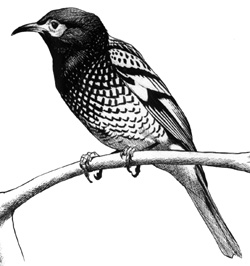
Day 27: We'll leave very early and make the long drive west through the beautiful Blue Mountains to the Capertee Valley. A number of inland species reach the eastern extent of their ranges here, and new birds may include Turquoise Parrot, White-throated Gerygone, Black-chinned and Fuscous Honeyeaters, Diamond Firetail, and Plum-headed Finch, though our main target will be the highly-endangered Regent Honeyeater. Night in Sydney.
Day 28: Our pelagic trip on a comfortable catamaran will take us east offshore into deep water beyond the continental shelf. During this daylong trip we should see many Southern Hemisphere seabirds, perhaps including Wandering and Black-browed Albatrosses, Great-winged and other Pterodroma petrels, up to six shearwaters, and several storm-petrels. Sometimes we encounter cetaceans on this trip too, and in the past these have included Humpback and Sperm Whales. Night in Sydney.
Day 29: On the final morning there will be a choice of either sightseeing in Sydney (on your own) or visiting Sydney Royal National Park for some final birding, where we might see Southern Emu-wren, Tawny-crowed Honeyeater, and Chestnut-rumped Heathwren. We'll also have another chance here for Superb Lyrebird. We'll catch an afternoon flight back to London where the tour concludes on the morning of day 30.
Cost £5850
Single Room Supplement £480
With extension £6450
Single Room Supplement £550
Maximum group size: 14 participants and 2 leaders.
Australia bird list
return to top of page
return to Australasia introduction
return to Calendar
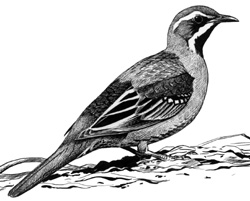
Chestnut Quail Thrushes creep through the mallee scrub in Wyperfield National Park.
|
The rarest bird we are likely to encounter on our tour is the endangered Regent Honeyeater. |
||