Bhutan – the unknown kingdom
Druk Yul or 'Land of the Thunder Dragon' is the remote Himalayan kingdom we know as Bhutan. Nestled deep in the heart of the Himalayan mountains, wedged between two giant and populous neighbours and yet secluded from them by some of the highest mountain ranges on earth, it is probably not surprising that Bhutan has retained much of its historic culture, its centuries-old rituals and its fascinating heritage. Nor is it surprising that Bhuddist Bhutan has remained poorly known to the West. While most of this awesome country is now open to foreigners, tourist quotas are restricted and few travellers and even fewer birdwatchers have had first-hand experience of this unique and diverse country.
On this trip to Bhutan we're sure to see birds in abundance, plus some spectacular, breathtaking scenery, yaks, nomads and much, much more as we travel almost right across the country. Over half of the land surface is forested, only a small fraction cultivated and much of the remainder is above the tree line. Nearly 600 species have so far been recorded in Bhutan. A significant number of these, such as Satyr Tragopan, Blood and Monal Pheasants, Rufous-necked Hornbill, Wedge-billed, Long-billed and Bar-winged Wren-Babblers, Yellow-throated Fulvetta, and Fire-tailed Myzornis are easier to see here than anywhere else on earth. For several others, such as White-bellied Heron, Ward's Trogon, Beautiful Nuthatch, Yellow-vented Warbler, Blue-fronted Robin, and White-naped Yuhina, Bhutan is one of the few easily accessible places to see them.
Bhutan is fabulous, and perhaps more than most other countries, fires the enthusiasm of all who have visited it and leaves almost everyone with a sense of privilege and a desire to return.
Sunday 13 April to Thursday 1 May
with Paul Holt as leader.
 Bhutan bird list
return to Asia introduction
return to Calendar
Day 1: The tour starts in London with a flight to Delhi where we'll
spend the night.
Day 2: We'll catch an early morning flight to Paro, Bhutan's only airport. Our spectacular route parallels the mighty Himalayan mountain chain and if the weather is good we should see Mount Everest. After clearing immigration we'll drive east through an enchanting valley with its gaily-decorated shingle-roofed houses and willow-fringed river. Red-billed Choughs are quite common in this valley and as we head east we'll stop to search for Ibisbill and Brown Dipper. With luck we might encounter a regional speciality such as Rufous-fronted Tit. We'll spend the night in Thimpu, Bhutan's delightful capital.
Day 3: We'll head east out of Thimpu, up onto the western slopes of the Dochu La, the first of a series of high altitude road passes. Entering the pristine mixed forests of hemlock, fir, oak, blossoming magnolias, and rhododendrons we should see a wealth of birds including some species-rich feeding flocks. Quarrelsome Nutcrackers are common and other highlights may include a skulking Hill Partridge or Satyr Tragopan, a Golden Bush-Robin, an immaculate Cutia, a Brown Parrotbill, or even a gorgeous Fire-tailed Myzornis. Most of our birding on this tour will be from the roads, which are well-paved and virtually lacking in traffic. Today however we'll venture off road on to a couple of trails that enable us to explore the forest more thoroughly. Night near Punakha.
Day 4: From our base at a splendid traditionally decorated hotel near Punakha, the former capital of Bhutan, we'll explore the braided channels of the Mo Chhu river and the bird-rich sub-tropical forests it contains. Our route will take us past the spectacular Punakha Dzong (a fortress and monastery combined). We should see an impressive array of species here, and on two occasions in the past these have included a White-bellied Heron, one of Bhutan's rarest specialities. We're sure to encounter several parties of brightly coloured minivets, noisy Striated Laughingthrushes and may also see more Ibisbills. A whole host of forest species such as Bay Woodpecker, Red-headed Trogon, and Wedge-tailed Pigeon, wait to be discovered. Fire-capped Tit breeds here, as does White-gorgeted Flycatcher and the rare Yellow-vented Warbler. We'll also search for a variety of skulkers including Lesser Shortwing, Spotted and Pygmy Wren-Babblers and all three species of tesia. Night near Punakha.
Day 5: Continuing east, past Wangdi Dzong (another monastery and fortress combined), we'll make a series of brief stops to scan the braided river channel. In the past we've seen Pallas's Gull and Pallas's Fishing Eagle regularly here and added a number of species to the Bhutanese list. We'll also check forest edges and explore some of the small patches of cultivation. We'll enter productive forest near the end of our journey and will stop here to look for species such as Blood Pheasant, Satyr Tragopan or a majestic Himalayan Monal. Spotted Laughingthrush, Yellowish-bellied Bush-Warbler, Rusty-flanked Treecreeper, and White-winged Grosbeak also occur here. We'll also make our first proper search for Ward's Trogon, one of Bhutan's premier avian prizes, before heading on to our superbly situated, though basic, guest house next to Gangtey Gompa in the heart of the Phobjika Valley.
Day 6: Leaving Gangtey we'll follow the twisting road up over the Pele La pass and into 'Central Bhutan'. A stand of ringal bamboo extends for about three miles below the pass and we'll search here for specialities such as Great and Brown Parrotbills, and Golden-breasted Fulvetta, surely one of the world's most attractive passerines. Night in Trongsa.
Days 7-9: From Trongsa we'll head south to our first camp site near Shemgang. Our main target on route is the rare and little-known Yellow-rumped Honeyguide, but we should also see a number of other species, perhaps including Emerald Dove, Large Niltava, and Russet Bush Warbler. The valley here is also a good area for the endangered Golden Langur monkey.
Our camp site, right in the heart of some superb forest, is at the lowest altitude that we will visit in Bhutan and species seen here on recent tours include Chestnut-breasted Partridge, Violet Cuckoo, Pin-tailed Green Pigeon, Lesser Rufous-headed Parrotbill and Rufous-faced Warbler. With luck we might also find the elusive Beautiful Nuthatch and we also stand a further chance of encountering the rare White-bellied Heron. We'll spend three nights here camping in modern tents erected for us by our Bhutanese crew.
Day 10: Retracing our route we'll head back north to spend the night in Trongsa.
Day 11: Today we'll climb over a bamboo-thronged pass into the first of the four Bumthang Valleys. The scenery suddenly changes to broad grassy valleys and rolling hillsides covered in spruce and fir and the avifauna changes equally abruptly. Nutcrackers can be common, though we'll have to spend a little more time searching for the region's real specialities - Fulvous Parrotbill, White-browed and Rufous-breasted Bush Robins and Beautiful Rosefinch. Night at Jakar.
Day 12: Continuing our circuit east we'll climb and eventually cross the Thrumsing La, which at 12,465ft is Bhutan's highest road pass. The road then plunges dramatically down into rich semi-tropical rainforest. This is the Lingmethang road, perhaps Asia's premier birding road. Many of Bhutan's most sought-after birds can be found here including Chestnut-breasted Partridge, Ward's Trogon, the majestic Rufous-necked Hornbill, Blue-naped Pitta, Blue-fronted Robin, and Wedge-billed, Long-billed and Bar-winged Wren-Babblers. Accommodation nearby is spartan, so we've opted to camp again, spending three nights under canvas right beside the superb Yongkala forest.
Days 13-14: We'll spend both days exploring the fabulous, lush primary forests near Lingmethang in search of the area's specialities. We're sure to see many new birds, and while not all of these are rare, many of them, such as Slender-billed and Coral-billed Scimitar-Babblers, Scaly and Blue-winged Laughingthrushes, Greater Rufous-headed Parrotbill, Broad-billed Warbler, White-naped Yuhina, and Rufous-throated Wren-Babbler are poorly known and unfamiliar to most birders.
Day 15: After some final birding in this superb area we'll retrace our route and head west, back over the Thrumsing La and down in to Bumthang. We'll concentrate on searching for the species that we missed on the way out - these may include fabulous Blood Pheasants, majestic Himalayan Monals or more demure species such as Russet Bush Warbler. Night in Jakar.
Day 16: Continuing westwards we'll travel from Jakar over the Yotong La to Trongsa and then back to Gangtey. Today's is another exciting journey during which we'll have time to explore the rich spruce, fir, hemlock and rhododendron forests and the large stands of dense bamboo that cloak the two major passes. We'll also spend time in some prime mid-altitude forest that provides us with opportunities to study the birds of this rich biotope. These could include species such as Black-eared Shrike-Babbler, Red-tailed Minla, White-tailed Robin, and Spotted Wren-Babbler. Night at Gangtey.
Day 17: Gangtey is a fabulous spot and our guest house is right next to the recently renovated Gangtey Gompa. Situated at the head of the Phobjika Valley (the winter home of a sizeable population of Black-necked Cranes) the magnificent Gompa dominates the valley. We'll search again for anything that we may have missed, while being serenaded by the gorgeous songs of Spotted Laughingthrushes, Yellowish-bellied Wren Babblers and calling Hill Partridges. It'll soon be time to leave Gangtey travelling over the Gangtey La and down to the Sang Chhu before ascending our final Bhutanese pass, the one we started with, the Dochu La. Night in Thimpu.
Day 18: We'll leave Bhutan's capital early today and head back to Paro. Our early morning flight should have us back in Delhi by midday and we'll have the opportunity to visit the River Yamuna on the outskirts of the city. We're sure to add a large number of new species to our list here including perhaps Grey Francolin, Oriental Darter, Bluethroat, and Yellow-bellied and Ashy Prinias. We'll then move to an airport hotel for an opportunity to freshen up and have a leisurely dinner before transferring to the airport for our flight home to London, where the tour concludes on Day 19.
Cost £4870
Single Room Supplement £200
Maximum group size: 10 participants and 1 leader.
Bhutan bird list
return to top of page
return to Asia introduction
return to Calendar
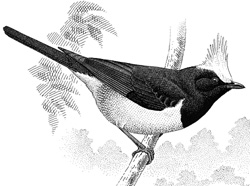
One of the prizes in eastern Bhutan is the Sultan Tit, surely one of the most spectacular Paridae in the world.