Kenya – Birders' special
During each of the last fourteen winters we have run a three-week tour to Kenya following an itinerary designed to produce the maximum number of bird and mammal species and we have been delighted by their success. During the basic two-week trip we see around 600 species and the third week usually brings the total to over 700! In addition we usually see in excess of 60 species of mammal. Kenya undoubtedly holds the greatest diversity of bird and mammal species of any African country and we believe that on this tour we can show you more of them than any other three-week trip. We should stress that this tour is designed for keen birdwatchers and while it isn't really strenuous it does involve dawn to dusk birdwatching on most days.
As well as visiting most of the sites included in our standard Kenya tours we'll visit bird-rich Kakamega Forest in the far west, Lake Naivasha, the coast and nearby Arabuko-Sokoke Forest, the isolated forest islands of the Taita Hills, and Lake Jipe on the border with Tanzania. The tour is divided into two parts, the first visiting areas to the west of Nairobi and the second the sites to the east.
These will be the 23rd and 24th tours that David has led to Kenya for Sunbird, and they follow an itinerary perfected by him over the years to provide what we believe to be the most enjoyable and productive birding trip imaginable to this wonderful country.
Tuesday 14 January to Thursday 30 January 2003
Extension to Thursday 6 February
Tuesday 13 January to Thursday 29 January 2004
Extension to Thursday 5 February
with David Fisher
and Mel Ogola
as leaders.
Cumulative bird list | Latest trip report
 return to Africa introduction
return to Calendar
Day 1: The tour begins in London with an overnight flight to Kenya.
Day 2: Morning arrival in Nairobi. We'll go straight to our hotel where we'll see our first African birds including local specialities such as Holub's Golden Weaver. We'll spend the rest of the day in Nairobi National Park - rolling grassland and scattered acacias with gazelles, Giraffes and, hopefully, Black Rhinoceros, as well as a heady array of birds including Ostrich, Grey Crowned-Crane, Secretary-bird, Verreaux's Eagle, Long-tailed Fiscal, and Red-billed Oxpecker among many others. At the famous hippo pools we'll take a walk among the Yellow-barked Acacias in search of such local specialities as Red-throated Tit, Dark-capped Yellow Warbler, and African Moustached Warbler. Night in Nairobi.
Day 3: On our first full day we'll drive southwest over the Ngong Hills and down through whistling-thorn acacia scrub to the Rift Valley and alkaline Lake Magadi. Birds are numerous here, perhaps including Pale Chanting Goshawk, Von der Decken's Hornbill, and Red-and-yellow Barbet, and on the lake there will be a variety of waterbirds including both species of flamingo and the very local Chestnut-banded Plover. Night in Nairobi.
Day 4: We'll drive north towards Mt. Kenya, stopping en route at the Blue Posts Hotel where we'll look for Silvery-cheeked and Trumpeter Hornbills in the well-wooded gardens. We'll then continue on to Mountain Lodge on the forested slopes of Mt. Kenya arriving in time for a late lunch. Although we are restricted to the lodge and nearby car park, birdwatching from the open roof is excellent as the forest presses in on three sides and we'll see many species including Olive and Eastern Bronze-naped Pigeons, Hartlaub's Turaco, Rüppell's Robin-Chat, Mountain Yellow Warbler, and Yellow-crowned Canary. The waterhole in front of the lodge attracts a variety of mammals including African Buffalo, Bushbuck, and the occasional Bushpig and Giant Forest Hog. At night Large Spotted Genets visit a floodlit feeding station and if we're lucky, a Verreaux's Eagle Owl will be in residence. Night at Mountain Lodge.
Day 5: We'll spend the early morning at Mountain Lodge and we'll then drive to Naro Moru River Lodge for lunch. The Lodge is located on the lower slopes of Mt. Kenya and, although the forest here is only a remnant patch, birds are numerous. After lunch we'll walk a beautiful riverside trail in search of Black Duck, Giant Kingfisher, Mountain Wagtail and up to eight species of sunbird including the stunning Tacazze. Night at Naro Moru River Lodge.
Day 6: In the early morning we'll drive slowly across the Solio plains, stopping as we go to study an array of small passerines perched up on the roadside wires. Primarily African larks, wheatears and cisticolas, they will also include a few familiar birds such as Whinchat. Lesser Kestrels are often numerous here and we also have a good chance of finding a Greater Kestrel. Once we rejoin the main road we'll turn south and then head up into the Aberdare Mountains. A good road will take us above tree-line into moorland habitat where we'll search for high-altitude specialities including Mountain Buzzard, Scarlet-tufted Malachite Sunbird and Slender-billed Starling. In the late afternoon we'll drive back down to Nyeri where we'll spend the night.
Day 7: After some pre-breakfast birding in the grounds of our hotel, we'll drive north to the spectacular Thompson Falls. En route we'll stop at an old quarry to look for Cape Eagle-Owl and then visit a small marsh to look for African Snipe and Tinkling Cisticola. We'll eat our picnic lunch at the falls and then we'll climb high into the mountains where flowering roadside leonotis bushes attract brilliant Golden-winged Sunbirds as well as the occasional Malachite. We'll drop down the eastern edge of the Rift Valley to Lake Nakuru where we'll spend the night. We may arrive in time to see Hildebrandt's Francolin feeding on the edge of the road and to look for Red-throated Wryneck in the garden of our lodge. Night at Lake Nakuru.
Day 8: We'll spend the morning at Lake Nakuru, world-famous for its vast flock of flamingos and its wealth of waterbirds. In the acacia woodland around the lake we'll look for such species as Narina Trogon, Arrow-marked Babbler, and African Firefinch. After lunch we'll drive to Hell's Gate National Park, famous for its colonies of Rüppell's Vultures and its hordes of Mottled and Nyanza Swifts. With luck, we may see Cape and Spotted Eagle-Owls here too. Night at Lake Naivasha.
Day 9: We'll spend the early morning on the shore of Lake Naivasha looking for Goliath Heron and Southern Pochard among a wealth of other waterbirds. After breakfast we'll drive north to Lake Baringo, stopping for Dark Chanting Goshawk and Silverbird on the way. We'll spend the afternoon in the garden and along the lakeshore, both rich in birds, including many that will be new for us. At dusk Slender-tailed Nightjars come gliding along the lakeshore and at night Hippos graze on the front lawns! Night at Baringo.
Days 10-12: After breakfast we'll drive west to Kakamega for a three-night stay. Kakamega Forest, now only a remnant of a once extensive woodland, is still full of birds, many of which are found nowhere else in Kenya. As always, forest birding can be hard work but with persistence we should obtain good views of many of the specialities, which include White-spotted Flufftail, Great Blue Turaco, Emerald Cuckoo, Blue-headed Bee-eater, Black-and-white Casqued Hornbill, Banded Prinia, Chestnut Wattle-eye, Lühder's Bush-Shrike, Mackinnon's Shrike, Black-billed and Vieillot's Black Weavers, Grey-headed Negro-finch, Red-headed Bluebill and many, many more.
One morning we'll drive west towards the Uganda border. Just after dawn we'll reach a major river where a pair of delightful Rock Pratincoles normally reside on some isolated boulders. We'll then move on to an area of streamside bushes and cultivated fields which hold a number of western species with small Kenyan populations including Senegal Coucal, Yellow-fronted Tinkerbird, Yellow-throated Leaf-love, Copper Sunbird, Bar-breasted Firefinch, and Compact Weaver. Nights in Kakamega.
Day 13: We'll leave early and drive to the shores of Lake Victoria to look for Blue-headed Coucal, Greater Swamp Warbler, Swamp Flycatcher, Papyrus Gonolek, Slender-billed Weaver and other papyrus-bed specialities. A visit to an extensive area of rice cultivation should produce Open-billed Stork, Southern Red Bishop, and Zebra Waxbill. In the afternoon we'll drive south to the Masai Mara National Reserve where we'll spend two nights at the tented Mara River Camp. Here Silver Galagos come to a feeding station during dinner, the rich rumbling grunts of hippos roll up from the river and at night the countryside resounds with animal noise.
Day 14: In many respects the Mara is the most spectacular part of the trip, with long views over flat-topped acacias and grassy plains with an abundance of animals. We'll spend the day in the reserve and should see most of the plains species for which East Africa is famous - Lion, Cheetah, Elephant, Wildebeest, Hartebeest, Topi, Thompson's and Grant's Gazelles, Zebra and many others. Birdwatching here will be delightful and highlights should include Rufous-bellied Heron, Saddle-billed Stork, Temminck's Courser, Sooty Chat and, hopefully, Ross's Turaco. Night at the Mara River Camp.
Day 15: Today we'll drive right through the centre of the Masai Mara and gain a clearer appreciation of this extensive reserve with its abundance of mammals and birds. We'll stop en route at Keekorok Lodge to look for Red-necked Spurfowl and will end up at Siana Springs, a luxurious tented camp at the eastern end of the Mara. After dinner there will an optional night-drive during which we should see bizarre Spring Hares, one or more species of mongoose, hopefully Bat-eared Fox, and several nightjars.
Day 16: Before breakfast we'll explore a valley adjacent to the camp where Kenya's only population of Magpie Shrikes can be found and will also search for African Penduline Tit. Later we'll drive back to Nairobi stopping en route to look for one of Kenya's few endemics, the endangered Sharpe's Longclaw. Night in Nairobi.
Day 17: We'll catch a morning flight to London arriving in the afternoon.
Extension to Eastern Kenya
Day 17: We'll spend the morning driving southeast to Tsavo National Park. We'll stop at Hunter's Lodge for lunch and to visit the bustling colony of African Golden Weavers, and we may encounter the resident Giant Kingfisher. In the afternoon we'll enter the park and look for species typical of dry acacia country such as Crested Francolin, Black-headed Plover, Black-faced Sandgrouse, and Golden-breasted Starling. We'll spend the night at Tsavo Safari Camp where the resident pair of African Scops Owls are sure to delight us.
Day 18: We'll spend the early morning birdwatching around the camp looking for local specialities such as White-fronted Sandplover, Little Sparrowhawk, and Violet Wood-Hoopoe. We'll leave after breakfast and spend all day driving to the coast through the eastern part of the park where we'll look for Buff-crested Bustard, Red-winged Lark, and Chestnut-backed and Chestnut-headed Sparrow Larks, and have a chance of seeing Somali Courser. Night in Watamu.
Days 19-20: We'll make early starts and spend three mornings in Arabuko-Sokoke Forest. Most famous for being the northernmost Brachystegia forest, Sokoke has three near-endemics; an owl, a pipit and a weaver. We have a good chance of seeing the first two, but the last is rather nomadic and can be hard to find. However, we should see such birds as Green Barbet, Black-headed Apalis, Retz's and Chestnut-fronted Helmet-Shrikes, and Amani and Plain-backed Sunbirds. We'll visit nearby Mida Creek to see the spectacular Crab Plover and other wintering waders including Greater and Lesser Sandplovers, and Terek Sandpiper. The beach at Malindi holds roosting flocks of gulls and terns including Sooty Gull and Crested, Lesser Crested, and Saunders's Terns. Nights at Watamu.
Day 21: After a final early morning in the forest we'll drive south to Mombasa and then inland to Ziwani Camp on the edge of Tsavo National Park West. If we make good time we'll stop in some dry scrub close to camp to look for White-headed Mousebird, Scaly Chatterer, and White-throated Robin. Night in Ziwani Camp.
Day 22: After an early breakfast we'll drive to Kitovu Forest close to the border with Tanzania. This remnant patch holds a number of species hard to see elsewhere in Kenya and we'll look in particular for Brown-hooded Kingfisher, Grey-olive Greenbul, Black-throated Wattle-eye, and Red-capped Robin-chat. After a couple of hours in the forest, we'll drive southeast to Lake Jipe, a bird-rich lake which holds a number of species difficult to see elsewhere in Kenya such as Spur-winged Goose, Water Thick-knee, African Skimmer, and Taveta Golden Weaver. After a picnic lunch on the lakeshore we'll drive to Taita Hills Lodge. Arriving in the late afternoon we'll visit the lodge's private nature reserve where highlights may include African Darter, White-backed Duck, and Brown-breasted Barbet. Night at Taita Hills Lodge.
Day 23: We'll spend the morning in a remnant patch of forest on the top of the Taita Hills looking for a number of species that occur nowhere else in Kenya such as Stripe-cheeked Bulbul, Taita Thrush, Evergreen Forest Warbler, Bar-throated (Taita) Apalis, Yellow-throated Woodland Warbler, and 'Taita' White-eye. In the afternoon we'll drive back to Nairobi where we'll spend the night.
Day 24: We'll catch a morning flight to London arriving in the afternoon.
Cost £3690 (2003)
Single Room Supplement £360 (2003)
With extension £5350 (2003)
Single Room Supplement £580 (2003)
Maximum group size: 13 participants and 2 leaders.
Cumulative bird list | Latest trip report
return to top of page
return to Africa introduction
return to Calendar
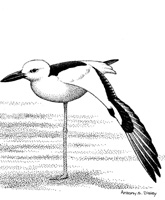
Mida Creek holds large flocks of wintering waders including several hundred bizarre Crab Plovers.